The right sleeping bag can make or break a night outdoors. For backpacking, you need a balance of warmth, weight, packability, comfort, and weather resistance—not simply the lowest temperature rating.
These 10 sleeping bags cover a range of conditions and budgets, from lightweight warm-weather options to insulated cold-weather mummy bags. Use the guide below to match features and performance to your trips.
Best 10 Sleeping Bags for Backpacking Picks for 2026
Best All-Around Down Value

- 550-fill, RDS-certified down
- Recycled, PFAS-free-treated fabrics
- About 2 lb. 6 oz. with 21°F ISO limit rating
Best For: Three-season backpackers seeking balanced warmth, packability, and sustainability
Best Roomy Budget Pick

- Spacious 90-by-39-inch XXL dimensions
- 30–70°F three-season range
- Water-resistant and machine washable
Best For: Tall campers and casual backpackers who prioritize room over low weight
Best Synthetic Cold-Weather Value

- Roomier synthetic mummy design
- Available in 0°, 20°, and 30°F options
- Includes compression sack and lifetime warranty
Best For: Campers and backpackers wanting durable synthetic warmth with flexible sizing and ratings
Best Versatile 3-Season Pick
OneTigris Bushcrafter’s Sleeping Bag

- Roomy 6.8-foot by 2.7-foot mummy design
- Water-repellent and machine washable
- Rated for mild spring, summer, and fall use
Best For: Roomy three-season backpacking and camping
Best Cold-Weather Protection
Coleman North Rim 0°F Sleeping Bag

- 0°F cold-weather rating
- Thermolock draft tube and adjustable hood
- Big-and-tall fit for users up to 6 feet 2 inches
Best For: Winter camping and cold-weather backpacking
Best Compressible Backpacking Value
TETON Sports 20°F Mummy Sleeping Bag

- 2.9-pound synthetic mummy bag
- Includes a heavy-duty compression sack
- 20°F survival rating with a warm hood and draft tube
Best For: Compressible three-season backpacking
Lightweight Warm-Weather Pick
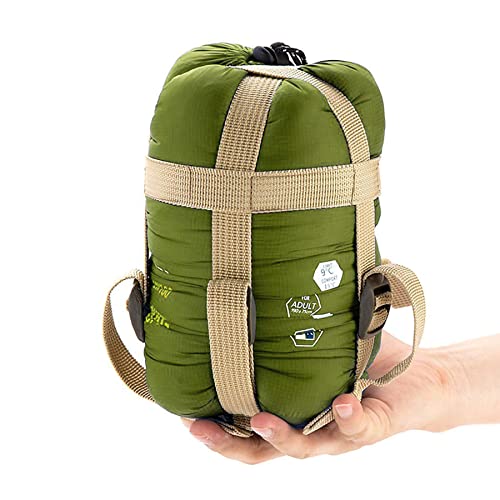
- About 1.5–1.7 lb packed weight
- Waterproof nylon shell
- Best around 55–60°F
Best For: Warm-weather backpacking and hiking
Versatile Three-Season Choice

- Rated about 50–80°F
- Waterproof double-layer shell
- Includes compression sack with straps
Best For: Three-season camping and roomy backpacking
Best All-Around Down Value – Kelty Cosmic 20
The Kelty Cosmic 20 is a practical pick for backpackers who want down insulation, a familiar mummy shape, and useful sustainability upgrades. Its 550-fill down, recycled fabrics, and roughly 2-pound-6-ounce weight make it a balanced option among sleeping bags for backpacking.
Best For: Three-season backpacking and campers who want a compressible down bag with recycled materials.
Pros:
- 550-fill down provides a strong warmth-to-weight balance.
- Recycled shell and liner fabrics use a PFAS-free durable water repellent.
- Dual-direction zippers and a compressible design improve campsite comfort and packability.
- RDS-certified, traceable down and a limited lifetime warranty add reassurance.
Cons:
- At about 2 pounds 6 ounces, it is not the lightest option listed.
- Its ISO limit rating is 21°F, so the 20-degree designation should not be treated as an extreme-cold rating.
The Cosmic 20 is a well-rounded choice when you want dependable three-season performance without moving to a highly specialized ultralight bag.
Best Roomy Budget Pick – VENTURE 4TH XXL Sleeping Bag
The VENTURE 4TH XXL is aimed at campers who prioritize space over low pack weight. Its 90-by-39-inch envelope shape, water-resistant polyester shell, and 30–70°F comfort range make it a roomy, flexible choice among sleeping bags for backpacking, especially for less weight-sensitive trips.
Best For: Tall or large campers who want generous room and three-season versatility for camping, road trips, and casual backpacking.
Pros:
- XXL dimensions provide substantial room to stretch out.
- Two-way zipper supports ventilation and temperature adjustment.
- Water-resistant polyester construction is durable and machine washable.
- Includes a compression sack and lifetime replacement guarantee.
Cons:
- At 4.4 pounds, it is considerably heavier than the down options listed.
- The envelope shape is less thermally efficient than a mummy design.
- The stated 30–70°F range makes it less suitable for colder three-season conditions.
Choose this bag when comfort and roominess matter more than minimizing your backpack load; ultralight hikers will likely find the weight restrictive.
Best Feature-Rich Ultralight Option – HLIMOUT Down Sleeping Bag
The HLIMOUT down sleeping bag combines a 680-fill-power down option with a removable pillow and compression sack. With a listed weight of about 2 pounds for the regular version, it offers useful packability and comfort-focused features for hikers comparing sleeping bags for backpacking.
Best For: Backpackers who want a compact down bag with an integrated removable pillow, storage pocket, and multiple temperature-fill choices.
Pros:
- 680-fill RDS-certified white duck down supports lightweight insulation.
- Compression sack reduces packed size to about 11.8 by 6.29 inches for the listed version.
- Removable pillow, internal pocket, and two-way zipper add convenience.
- Water-repellent 40D nylon shell and compartmentalized construction improve practical outdoor use.
Cons:
- Temperature performance depends on the selected fill version, so buyers must check the configuration carefully.
- The supplied notes present several temperature ranges rather than one single standardized rating.
- Its one-year warranty is shorter than the lifetime warranties listed for some alternatives.
This is an appealing feature-packed option for hikers who value a small packed size and built-in sleep accessories, provided they choose the fill level suited to their conditions.
Best Synthetic Cold-Weather Value – TETON LEEF 20°F
The TETON LEEF 20°F is a synthetic mummy bag designed to balance warmth, room, and portability. Its roomier mummy cut, microfiber insulation, compression sack, and choice of 0°, 20°, or 30°F versions make it a versatile contender among sleeping bags for backpacking.
Best For: Backpackers and campers who prefer a roomier synthetic mummy bag with selectable temperature ratings and a lifetime warranty.
Pros:
- Roomier mummy design allows easier movement than a narrow traditional cut.
- Multiple temperature options support different trip conditions.
- Includes a compression sack for easier backpack packing.
- Lifetime warranty covers defects in materials or workmanship for the original owner.
Cons:
- The listed 20°F Regular weighs 3.5 pounds, heavier than the down alternatives.
- The supplied specifications do not state an ISO comfort or limit rating.
- The listed dimensions are relatively narrow at 21 inches wide.
The LEEF makes sense for shoppers seeking straightforward synthetic insulation and a more forgiving fit, though its weight favors general camping and moderate-load backpacking over ultralight trips.
Best Versatile 3-Season Pick – OneTigris Bushcrafter’s Sleeping Bag
For shoppers comparing sleeping bags for backpacking in mild three-season conditions, the OneTigris Bushcrafter’s offers a roomy mummy shape, water-repellent pongee shell, and a compact stuff sack. Its 3.1-pound weight and 46.4–59°F comfort range make it a practical choice for spring, summer, and fall outings.
Best For: Backpackers and campers who want extra interior space for moderate-weather trips.
Pros:
- Wide 6.8-foot by 2.7-foot design accommodates adults and kids.
- Water-repellent, quick-drying shell and machine-washable construction.
- YKK anti-snag zippers and a cord-stopped hood add convenience and coverage.
- Includes a compact tube-shaped stuff sack for carrying and storage.
Cons:
- Designed for 3-season temperatures rather than severe cold.
- At 3.1 pounds, it may be heavier than ultralight backpacking options.
The OneTigris is a sensible all-around option when roominess, easy care, and weather resistance matter more than minimizing pack weight. For colder routes, consider a bag with a lower temperature rating.
Best Cold-Weather Protection – Coleman North Rim 0°F Sleeping Bag
For cold-weather sleeping bags for backpacking, the Coleman North Rim emphasizes warmth with a 0°F rating, Coletherm hollow polyester insulation, and a Thermolock draft tube. Its big-and-tall fit and adjustable hood provide useful coverage for winter camping, though its listed packed dimensions suggest a larger carry profile.
Best For: Cold-weather campers and taller users who prioritize insulation and fit over minimal pack size.
Pros:
- Rated to keep users warm in temperatures as low as 0°F.
- Thermolock draft tube helps limit heat loss through the zipper.
- Adjustable hood balances warmth and ventilation.
- Machine washable and backed by a 5-year limited warranty.
Cons:
- Its cold-weather insulation may be more than needed for warm-season trips.
- Big-and-tall construction and listed 17.5-by-12.7-inch dimensions may take more pack space.
The North Rim is best suited to backpacking trips where reliable cold-weather coverage is the priority. Its 0°F rating and generous 82-by-32-inch dimensions make it a stronger choice for winter conditions than lightweight summer-oriented bags.
Best Compressible Backpacking Value – TETON Sports 20°F Mummy Sleeping Bag
The TETON Sports 20°F bag is a strong contender among sleeping bags for backpacking when compressibility and warmth are important. It weighs 2.9 pounds, uses lofty microfiber insulation, and includes a durable compression sack to simplify packing.
Best For: Backpackers who want a compressible synthetic mummy bag with a 20°F survival rating.
Pros:
- Microfiber insulation offers loft, warmth, and compressibility.
- Includes a compression sack with heavy-duty straps for easier packing.
- Hood, zipper draft tube, and vaulted footbox help retain warmth.
- Soft double-brushed liner supports a more comfortable night’s sleep.
Cons:
- The 2.9-pound weight is not the lightest option for ultralight trips.
- Its mummy shape may feel less spacious than a roomier rectangular design.
With a 20°F survival rating, a 7-foot maximum height recommendation, and included compression sack, this TETON bag offers a practical balance for three-season backpacking. Using a sleeping pad and restoring the bag’s loft can improve warmth in the field.
Lightweight Warm-Weather Pick – Compact Nylon Sleeping Bag
If you need sleeping bags for backpacking in mild conditions, this compact envelope-style option emphasizes low weight and easy packing. Its nylon shell is described as waterproof and durable, while the polyester lining is intended to feel breathable and skin-friendly.
Best For: Warm-weather backpacking, hiking, camping, and users who prioritize a lightweight packed size.
Pros:
- Weighs about 1.5–1.7 pounds and compresses into a compact sack.
- 83-by-30-inch design fits most adults, with room for one adult or two children.
- Waterproof nylon exterior and smooth zipper support outdoor use.
- Can also be used as a camping comforter.
Cons:
- Designed for warm conditions, with a stated comfort range around 55–60°F.
- Its envelope shape may be less thermally efficient than a closer-fitting bag.
This is a practical choice when pack weight matters more than cold-weather insulation. For three-season or colder trips, compare its warm-weather rating with the expected overnight temperatures.
Versatile Three-Season Choice – MalloMe Adult Sleeping Bag
For shoppers comparing sleeping bags for backpacking across spring, summer, and fall, this rectangular MalloMe model offers a balance of coverage, compressibility, and weather protection. It is rated for roughly 50–80°F comfort and includes a compression sack for transport.
Best For: Three-season camping and backpacking for adults or older children who want a roomy rectangular design.
Pros:
- Three-season temperature range is listed at approximately 50–80°F.
- Waterproof outer shell uses a double-layered S-shaped stitch design.
- Compression sack with straps makes storage and carrying easier.
- Drawstring hood, snag-free double-sided zippers, and a securing strap add convenience.
Cons:
- At about 3 pounds, it is heavier than the lightest backpacking-oriented options.
- Its rectangular shape may take more pack space than a tapered design.
The MalloMe is a flexible all-around option when comfort and easy maintenance are priorities. Its machine-washable design and wipe-clean shell are useful for frequent family or camping trips.
Adjustable Budget Option – Three-Season Waterproof Sleeping Bag
This rectangular sleeping bag is a budget-minded option for sleeping bags for backpacking, camping, and general outdoor travel. It combines a water-resistant polyester exterior with a hood drawstring and foot zipper, allowing users to adjust coverage and ventilation during three-season trips.
Best For: Casual backpacking, family camping, summer camps, and users seeking adjustable features at a moderate packed weight.
Pros:
- Designed for three-season use with a stated 50–68°F design range.
- Waterproof, breathable polyester shell helps resist damp conditions.
- Hood drawstring helps retain warmth around the head.
- Foot zipper can increase ventilation, and the bag wipes clean easily.
Cons:
- At 3.3 pounds, it is relatively heavy for weight-conscious backpacking.
- Fits campers up to about 5 feet 11 inches, limiting length for taller users.
- Its listed compressed size range may still occupy noticeable pack space.
This model makes sense for shorter users and casual trips where adjustability and weather resistance matter more than ultralight performance. Taller backpackers should verify the fit before buying.
How We Picked the Best Sleeping Bags for Backpacking
We focused on the features that matter most when carrying sleep gear over distance: temperature rating, insulation type, packed size, weight, hood and zipper design, fit, durability, and moisture protection. The selection includes mummy-style bags for efficient warmth, roomier designs for comfort, and versatile options for camping trips that do not require the smallest possible load.
Temperature ratings are useful comparison points, but they are not guarantees. Personal metabolism, clothing, sleeping pads, humidity, and wind all affect comfort. A properly insulated sleeping pad is especially important because it prevents body heat from escaping into the ground.
Quick Comparison
| Best for | Look for | Typical priority |
|---|---|---|
| Ultralight or long-distance trips | Down insulation, low weight, compact compression | Packability |
| Wet or variable conditions | Water-resistant shell and synthetic insulation | Moisture tolerance |
| Cold-weather camping | Lower temperature rating, draft collar, hood | Warmth |
| Casual camping and beginners | Reasonable price, simple care, comfortable fit | Value |
| Couples or larger sleepers | Wide or double configuration | Roominess |
Key Buying Factors for Sleeping Bags for Backpacking
Temperature Rating
Choose a bag rated below the coldest conditions you expect, especially if you sleep cold or camp in shoulder seasons. A 20°F bag is a common three-season choice, while 0°F models are better suited to winter conditions but are heavier and bulkier. Check whether a listing reports a comfort rating, lower limit, or survival rating.
Insulation and Weather Protection
Down usually offers the best warmth-to-weight ratio and compresses well, but it loses insulating ability when wet unless treated and kept dry. Synthetic fill is often more affordable, dries faster, and remains more dependable in damp conditions. A water-resistant shell or PFAS-free durable water repellent can help protect insulation from condensation and light moisture.
Shape, Fit, and Ventilation
Mummy bags retain heat efficiently and generally pack smaller. Rectangular or oversized bags provide more freedom to move but can leave extra air to warm. Make sure the shoulder and hip dimensions fit your body without compressing the insulation. Look for a well-designed hood, draft tube, adjustable footbox, and snag-resistant zipper when cold-weather performance matters.
Weight and Packed Size
For backpacking, compare total weight and compressed dimensions rather than judging by the product name alone. Compression sacks can reduce bulk, but do not store down or synthetic insulation compressed for long periods. Also account for the sleeping pad, liner, and dry bag if you are building a complete sleep system.
Who Should Buy Which Sleeping Bags for Backpacking?
Choose a lightweight down mummy bag if you prioritize low pack weight and regularly camp in relatively dry conditions. Pick a synthetic mummy bag for humid climates, wet forecasts, frequent use, or a lower purchase price. A warmer 0°F-class bag makes sense for winter trips, high elevations, and cold sleepers, while a 20°F option is more versatile for many three-season routes.
Warm-weather and compact bags are suitable for summer backpacking, festivals, and mild campgrounds, but they should not be used beyond their realistic comfort range. Larger or double bags are best for car camping and shared sleeping space rather than long-distance hikes. Finally, confirm the packed weight, dimensions, return policy, and care instructions before buying—small specification differences can have a noticeable effect on trail comfort.