If you want backup power that works at home, on the road, or off-grid, portable power stations with solar input are one of the most flexible options you can buy.
This roundup focuses on models that balance charging speed, battery capacity, output, and solar compatibility so you can choose the right fit with confidence.
Best 10 Portable Power Stations with Solar Input Picks for 2026
Rapid-Top-Up Home Backup

- 500W solar input with fast wall charging
- Expandable to 5kWh with EcoFlow batteries
- 4000-cycle LiFePO4 battery and 13 outlets
Best For: Fast-charging backup and expandable off-grid setups
Compact Solar Travel Set
Jackery Solar Generator 1000 V2

- Includes a 200W solar panel bundle
- 1070Wh capacity with 1500W AC output
- 23.8-lb body with 4000-cycle LFP battery
Best For: Camping, road trips, and bundled solar charging
High-Power Backup Compact

- 1,024Wh capacity with 2,000W output
- Solar recharges in 1.8 hours at up to 600W
- 10 ms UPS backup in a compact body
Best For: Compact backup power with fast solar recharging
Budget Mini Solar Kit
MARBERO 172Wh Solar Generator Kit

- Includes a 40W foldable solar panel
- Power station weighs just 3.3 lbs
- AC, USB-A, USB-C, and DC outputs included
Best For: Light travel and small-device solar charging
High-Capacity Home Backup Pick
Anker SOLIX S2000 2,010Wh Portable Power Station
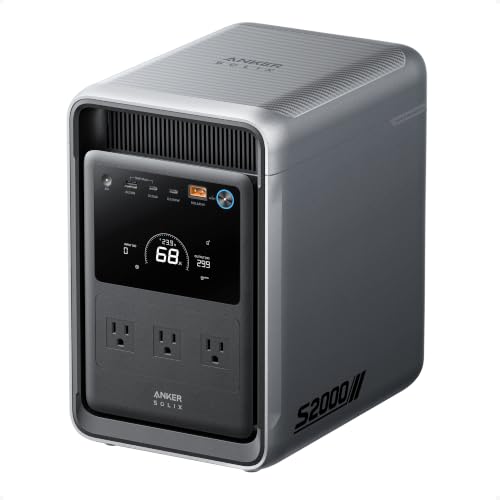
- 2,010Wh LiFePO4 battery
- 1,500W output, 3,000W peak
- Up to 400W solar input
Best For: Home backup and longer outages
Fast-Charging Solar Backup Pick
BLUETTI AC180 1152Wh Portable Power Station

- 1152Wh LiFePO4 battery
- 500W solar input
- 1800W output with 8 outlets
Best For: Campers and home backup buyers who value fast recharge
Compact Travel Solar Bundle
Anker SOLIX C300 288Wh Portable Power Station

- 288Wh battery with 300W output
- Includes a 60W solar panel
- 15.5-lb compact travel design
Best For: Travel, phones, and light off-grid use
UPS Backup Home Backup Pick
LIBRIDS 640Wh LiFePO4 Power Station

- 10ms UPS switch for outage protection
- 640Wh capacity, 600W output, 1200W surge
- 1.5-hour AC recharge and 4000+ cycle LiFePO4 battery
Best For: Home backup, CPAP support, and fast emergency charging
Lightweight Travel Pick
BLUETTI Elite 30 V2 Compact Power Station

- 9.4-lb body with 288Wh capacity
- 600W output with 1500W lifting mode
- Solar, AC, and car charging with 10ms UPS
Best For: Travel, short outages, and compact everyday backup
Mid-Size Solar Ready Pick
GRECELL 519Wh 500W Power Station

- 519Wh capacity with 500W rated output
- Up to 10 devices with AC, USB-C, USB-A, DC, and car ports
- Solar, car, and wall recharging supported
Best For: RV trips, home backup, and multi-device charging
Rapid-Top-Up Home Backup – EcoFlow Delta 3 1024Wh 1800W
If you want portable power stations with solar input that also recharge quickly from the wall, the EcoFlow DELTA 3 is built for fast turnaround and flexible backup use. Its 500W solar input, 1800W AC output, and expandable battery ecosystem make it a strong fit for users who want one unit that can handle both everyday convenience and emergency power planning.
Best For: Fast-charging home backup, camping, and users planning expandable off-grid power.
Pros:
- Charges to full in 56 minutes with combined 500W solar input and 1500W max AC input.
- Expandable up to 5kWh with compatible EcoFlow battery packs.
- LiFePO4 battery is rated for 4000 cycles to 80% capacity.
- Can power 13 appliances at once with X-Boost support for higher-demand resistive loads.
Cons:
- Solar input is strong, but the full fast-charge spec depends on pairing with AC input.
- At 12.5 kg, it is not the lightest option for frequent carrying.
The DELTA 3 stands out if your priority is speed, durability, and system growth rather than just basic portable backup. It is best viewed as a capable core power station for home, RV, or emergency use where fast recharging matters.
Compact Solar Travel Set – Jackery Solar Generator 1000 V2
The Jackery Solar Generator 1000 v2 is a practical pick for portable power stations with solar input when you want a ready-to-go bundle instead of buying the panel separately. With a 1070Wh battery, 1500W AC output, and the included 200W solar panel, it suits camping, road trips, and emergency use where compact size and simple recharging matter.
Best For: Camping, road trips, and buyers who want a bundled solar generator with easy solar charging.
Pros:
- Includes a 200W solar panel in the box for a more complete setup.
- 1,070Wh capacity and 1,500W AC output support a wide range of devices.
- Lightweight at 23.8 lbs with a foldable handle for easier transport.
- LFP battery is rated for 4,000 cycles and over 10 years of use.
Cons:
- Solar charging to 80% takes 6 hours with the included 200W panel.
- It has only three AC outlets, so outlet count is limited versus larger stations.
This bundle makes sense if you want a balanced mix of portability, included solar gear, and long battery life. It is especially appealing for users who prefer a straightforward solar generator package rather than piecing components together.
High-Power Backup Compact – Anker SOLIX C1000 Gen 2
The Anker SOLIX C1000 Gen 2 is a strong fit for portable power stations with solar input when you need higher output in a relatively compact body. It delivers 1,024Wh of capacity, 2,000W output, and solar recharging in 1.8 hours with up to 600W of solar, making it useful for backup power, camping, and off-grid setups.
Best For: Users who want a compact high-output station with quick solar recharge and UPS support.
Pros:
- 2,000W output and 3,000W peak support power-hungry appliances.
- Recharges from solar in 1.8 hours with up to 600W input.
- 10 ms UPS backup helps keep sensitive devices running.
- Compact design is 14% smaller and 11% lighter than similar models.
Cons:
- Solar input is capped at 600W, so it may not suit users needing larger solar arrays.
- It ships without a solar panel in the box.
Overall, the C1000 Gen 2 is aimed at buyers who want serious output without moving into a much larger unit. It is a practical choice for mixed home, RV, and off-grid use where fast solar recharge and UPS behavior are both important.
Budget Mini Solar Kit – MARBERO 172Wh Solar Generator Kit
The MARBERO 172Wh Solar Generator kit is a lightweight entry point for portable power stations with solar input, especially if you mainly need to charge small electronics. The included 40W solar panel, compact size, and multiple USB and DC outputs make it a handy travel companion for overnight trips, light camping, and backup charging.
Best For: Light travel, small-device charging, and budget-friendly solar backup.
Pros:
- Includes a matching 40W foldable solar panel.
- Very light at 3.3 lbs for the power station and 2.3 lbs for the panel.
- Offers AC, USB-A, USB-C, and DC outputs for small electronics.
- Can recharge in about 7-8 hours from AC and also supports car charging.
Cons:
- 200W AC output is much lower than larger power stations.
- Best suited to phones, laptops, cameras, and similar low-draw devices.
This kit makes the most sense as a lightweight, low-power solar solution rather than a whole-home backup source. If your goal is portability and basic charging on the go, it delivers a simple and compact setup.
High-Capacity Home Backup Pick – Anker SOLIX S2000 2,010Wh Portable Power Station
If you want portable power stations with solar input for home backup or outage prep, the Anker SOLIX S2000 is built around long runtime and a relatively compact footprint for its capacity. Its 2,010Wh LFP battery, 1,500W continuous output, and support for up to 400W solar input make it a practical choice for keeping essential appliances running when you need a larger reserve.
Best For: Home backup, longer outages, and users who want a high-capacity solar-ready unit with a lighter-than-average design.
Pros:
- 2,010Wh LiFePO4 battery with a claimed 15-year lifespan and 10,000 cycles
- 1,500W continuous output and 3,000W peak output for essential appliances
- Supports up to 400W solar input and multiple charging methods
- 30% smaller and 25% lighter than the industry average at 35.7 lbs
Cons:
- No 12V DC port
- Runtime depends heavily on appliance load, model, and temperature
Overall, the S2000 is the strongest fit here if capacity and solar recharging matter more than compactness alone. It focuses on efficient home backup use rather than extra accessory ports, which keeps the design straightforward.
Fast-Charging Solar Backup Pick – BLUETTI AC180 1152Wh Portable Power Station
For shoppers comparing portable power stations with solar input, the BLUETTI AC180 stands out for charging speed and all-around output. It combines a 1152Wh LiFePO4 battery with 1800W output, plus a 500W solar input rating that makes it easier to refill from sunlight when you’re off-grid or dealing with outages.
Best For: Campers and home users who want fast charging, strong output, and a solar-ready backup unit.
Pros:
- 1152Wh LiFePO4 battery with 1-hour AC charging at 1440W input
- 500W solar input for a 2.8-3.3 hour solar recharge estimate
- 1800W output with 8 outlets, plus app-boosted 2700W capability
- 20 ms UPS switchover for essential backup power
Cons:
- Heavier than ultra-compact travel units at 37.4 lbs
- Solar charging is fast, but still depends on enough panel input and conditions
The AC180 is a strong middle-ground option if you want speed without giving up useful capacity. Its mix of fast wall charging, solar support, and UPS functionality makes it versatile for both camping and emergency use.
Compact Travel Solar Bundle – Anker SOLIX C300 288Wh Portable Power Station
If you need portable power stations with solar input for travel, day trips, or light-duty backup, the Anker SOLIX C300 keeps things compact and simple. This bundle pairs a 288Wh power station with a 60W solar panel, giving you a small, easy-to-carry setup that can recharge from the wall, car, PD 3.1 USB-C, or solar.
Best For: Travelers and casual outdoor users who want a lightweight solar bundle for phones, small devices, and short outings.
Pros:
- Compact 288Wh battery with 300W output and 600W surge
- Includes a 60W solar panel for sustainable off-grid charging
- Fast 80% wall recharge in 50 minutes and multiple recharge options
- Lightweight 15.5-lb design with 11 ports and quiet 25dB operation
Cons:
- 300W output is best for smaller electronics, not heavy appliances
- The power station and solar panel ship separately
The C300 is the easiest pick to carry, but it’s also the least powerful of the three. That makes it a smart match when portability and solar convenience matter more than whole-home backup capacity.
UPS Backup Home Backup Pick – LIBRIDS 640Wh LiFePO4 Power Station
If you want a portable power stations with solar input option that’s built for outages as much as trips, the LIBRIDS 640Wh model stands out for its 10ms UPS switching, fast AC recharge, and 600W running output. It’s a practical choice for keeping routers, CPAP machines, laptops, and other essentials going when the power cuts out, while still staying compact enough for camping and road travel.
Best For: Home backup users, CPAP owners, and campers who want fast recharge and UPS protection.
Pros:
- 10ms UPS automatically switches to battery during outages.
- 640Wh capacity with 600W output and 1200W surge for startup loads.
- Charges fully in 1.5 hours via AC for quick turnaround.
- LiFePO4 battery rated for 4000+ cycles with a metal enclosure.
Cons:
- The “Indoor Use Only” warning means you should avoid rain, wet, or humid conditions.
- 600W output is not meant for larger appliances that exceed its rating.
Overall, this is a strong pick if your priority is reliable backup power with fast charging and clean pure sine wave output. The extra ports, UPS feature, and long-life battery make it especially useful for emergency preparedness.
Lightweight Travel Pick – BLUETTI Elite 30 V2 Compact Power Station
For shoppers comparing portable power stations with solar input and wanting a lighter carry, the BLUETTI Elite 30 V2 focuses on portability without giving up useful output. At 9.4 pounds with 288Wh capacity, it covers everyday essentials, and its 600W continuous output plus 1500W lifting mode gives it more flexibility than many small units.
Best For: Travelers, storm prep, and anyone who wants a compact power station with quick recharge options.
Pros:
- Very lightweight at 9.4 pounds for easy carry.
- 600W continuous output with 1500W Power Lifting mode.
- Supports solar, wall, car, and other charging modes.
- 10ms UPS helps keep routers, laptops, and CPAP machines running.
Cons:
- 288Wh capacity is better for essentials than for longer runtimes.
- Its compact size means it’s not aimed at powering larger household loads.
This model makes sense if you want a small, flexible backup source that recharges quickly and travels easily. It is especially appealing for short trips, outage kits, and users who value efficient charging and UPS support in a compact form.
Mid-Size Solar Ready Pick – GRECELL 519Wh 500W Power Station
If you want portable power stations with solar input support for camping or outage backup, the GRECELL 519Wh unit offers a straightforward mix of capacity, port variety, and solar recharging. With 500W rated output, pure sine wave AC outlets, and room for up to 10 devices, it’s aimed at common electronics and small appliances rather than heavy-duty loads.
Best For: RV campers, home emergency kits, and users who need many device ports in a mid-size unit.
Pros:
- 519Wh capacity with 500W rated output for everyday essentials.
- Can power up to 10 devices at once, including AC, USB-C, USB-A, DC, car, and wireless charging.
- Supports solar, car, and wall charging options.
- Pure sine wave inverter and BMS protection for safer use with sensitive devices.
Cons:
- Not suitable for devices above 500W rated power.
- Solar panel is not included with the unit.
- Recharge times vary based on panel size and sunlight conditions.
As a mid-size option, this GRECELL model is best when you want flexible charging and multiple outputs without moving up to a much larger generator. It fits well for camping, RV use, and practical home backup for smaller electronics.
How We Picked the Best Portable Power Stations with Solar Input
We focused on Portable Power Stations with Solar Input that offer a useful mix of capacity, output, charging flexibility, and value. Priority went to units with reliable battery chemistry, practical port selection, and solar-ready designs that make recharging simpler during outages, travel, or camping.
We also looked for a range of sizes, from compact grab-and-go units to larger systems built for longer backup runtime.
Quick Comparison: What Matters Most
The best choice depends on how you plan to use it. Smaller models are easier to carry and better for phones, tablets, lights, and laptops. Mid-size units work well for CPAP machines, mini-fridges, and camera gear. Larger systems are better suited to appliances, extended outages, and heavier daily use.
Match Capacity to Runtime
Watt-hours tell you how much energy the battery stores, while watt output tells you what it can run. Higher numbers do not always mean better if you only need lightweight portable charging.
Check Solar Charging Support
Solar input range, maximum input wattage, and compatibility with your panel setup matter. A station that charges quickly from solar can be far more useful during long outages or trips away from wall power.
Key Buying Factors for Portable Power Stations with Solar Input
Battery chemistry matters. LiFePO4 and other lithium iron phosphate designs usually offer longer cycle life and better long-term durability than older battery types. Port selection is just as important: look for AC outlets, USB-C PD, USB-A, and DC outputs that match your devices.
Also consider recharge options. Fast wall charging is convenient, but strong solar input can reduce downtime. If you plan to move the unit often, weight, handle design, and overall footprint will matter more than raw capacity.
Finally, pay attention to surge power and inverter rating if you plan to run motors, compressors, or kitchen appliances. A station can have enough stored energy but still fall short on startup power.
Who Should Buy Which Portable Power Stations with Solar Input?
Choose a compact model if you need a lightweight backup for phones, laptops, travel, and short outages. Go with a mid-range unit if you want a strong all-around solution for camping, home essentials, and moderate appliance use. Pick a high-capacity option if your priority is emergency backup, extended off-grid stays, or running several devices at once.
If you are comparing Portable Power Stations with Solar Input mainly for emergencies, prioritize capacity, inverter strength, and recharge speed. If portability matters more, focus on lighter weight, faster USB-C charging, and a simpler, more compact design.