Hybrid snowboard bindings aim to make getting in and out quicker without giving up the adjustment and support riders expect from straps. But “hybrid” covers different entry systems, and the right choice depends as much on your boots as your preferred feel.
These picks span rear-entry, fast-entry, and strap-friendly designs. Use the guide below to narrow down the features that matter before you buy.
Best 9 Hybrid Snowboard Bindings Picks for 2026
Best All-Mountain Balance

- Rear-entry highback with hybrid strap
- Moderate 6/10 flex
- Cushioned footbeds
Best For: Intermediate all-mountain riders seeking quick entry and adjustable support
Best Entry Flexibility

- Rear-entry or traditional strap-in
- CombiDisc supports 4×4 and Burton Channel
- Lifetime baseplate warranty
Best For: Riders who want two ways to fasten their bindings
Best Fast Strap-In

- Connected ladder for one-handed fastening
- Ratchet-adjustable ankle tension
- Moderate 5/10 flex
Best For: Intermediate riders seeking quicker two-strap fastening
Best for Larger Boots
- XL fits US men's 11–13 boots
- Reclining quick-entry highback
- Adjustable hybrid strap and 6/10 flex
Best For: Intermediate riders with larger boots seeking quick entry
Best for Fast Entry
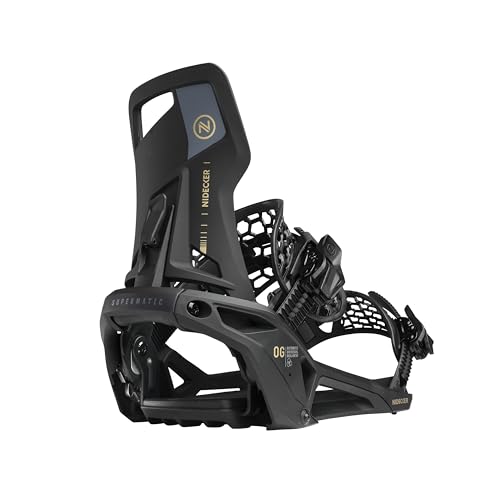
- Automatic step-in-style engagement
- Large fits US men's 8.5–10.5 boots
- Padded highback and damped footbeds
Best For: Resort riders prioritizing quick engagement
Best Large Hybrid-Strap Fit
Nidecker Flow Fuse Hybrid Large

- Large fits US men's 8.5–10.5 boots
- Reclining quick-entry highback
- Hybrid strap with cushioned footbed
Best For: Intermediate all-mountain riders needing the Large size
Fast-Lap Pick

- Hands-free-style engagement
- Rigid base for precise response
- Padded highback and dampening footbeds
Best For: Quick resort laps with firm support
Playful All-Mountain Pick
- Reclining quick-entry highback
- Adjustable hybrid strap
- Supportive 6/10 flex
Best For: Intermediate all-mountain riding
Direct-Response Pick

- Stiff 8/10 flex
- Aluminum-alloy baseplate
- Rapid-entry Hybrid strap
Best For: Advanced riders seeking direct edge control
Best All-Mountain Balance – Nidecker Flow Fuse Hybrid
For riders comparing hybrid snowboard bindings, the Nidecker Flow Fuse Hybrid combines a quick-opening rear-entry highback with a hybrid strap for adjustable boot support. Its 6/10 flex aims for a balance of control and playfulness.
Best For: Intermediate riders who want faster entry without giving up strap adjustment for all-mountain riding.
Pros:
- Rear-entry highback opens wide and locks in place.
- Hybrid strap provides toe-cap feel and ankle support.
- Cushioned footbeds help absorb chatter and impacts.
Cons:
- The listed medium size fits US men’s 5.5–8.0 or women’s 7.0–9.5; check your boot size before ordering.
- A 6/10 flex may not suit riders seeking an especially stiff binding.
The Fuse Hybrid is a practical middle ground if you value quick entry, adjustable support, and moderate flex more than maximum stiffness.
Best Entry Flexibility – Snowboard Binding Core FASTEC
The Snowboard Binding Core stands out among hybrid snowboard bindings by letting you use quick rear-entry or a conventional strap-in approach. Its adjustable fit and CombiDisc mounting cover 4×4 inserts and the Burton Channel System.
Best For: Riders who want to switch between rear-entry convenience and traditional strap-in fastening.
Pros:
- Two entry options accommodate different preferences.
- CombiDisc supports 4×4 inserts and the Burton Channel System.
- Reinforced-plastic baseplate carries a lifetime warranty; other parts have a two-year warranty.
Cons:
- The listed size covers women’s 7.5–11.5 or men’s 6–10, so confirm your boot falls within that range.
- The supplied details do not specify a flex rating.
Choose this model if the ability to change how you get in matters more to you than having a stated flex specification.
Best Fast Strap-In – Bataleon Ghost FASE
The Bataleon Ghost FASE takes a strap-focused approach to hybrid snowboard bindings: its FASE system keeps the ankle ladder connected for quick, one-handed fastening while retaining a ratchet for tension adjustments. The listed flex is 5/10.
Best For: Intermediate riders who prefer a traditional two-strap feel but want a quicker fastening routine.
Pros:
- Connected ankle ladder speeds up fastening without eliminating ratchet adjustment.
- AuxTech Cradle ankle strap is designed to distribute pressure evenly around the boot.
- Lightweight Ghost highback and forward-lean adjustment provide tuning options.
Cons:
- The FASE ankle ladder is compatible only with bindings using FASE technology.
- The listed medium size fits US men’s 7.5–10.5; verify sizing before purchase.
The Ghost FASE makes sense if you want to retain hands-on strap adjustment while spending less time fastening in at the start of a run.
Best for Larger Boots – Nidecker Flow Fuse Hybrid XL
These hybrid snowboard bindings pair a reclining, quick-entry highback with an adjustable hybrid strap. This X-Large listing fits US men’s 11–13 boots and has a stated 6/10 flex for a balance of support and playfulness.
Best For: Intermediate all-mountain riders with larger boots who want faster entry without giving up strap adjustment.
Pros:
- Reclining highback opens wide for entry and locks for riding.
- Hybrid strap combines toe-cap feel with ankle support.
- Cushioned footbed helps dampen chatter and impacts.
Cons:
- X-Large sizing is intended for US men’s 11–13 boots; check boot fit before ordering.
- Strap adjustment remains part of the setup, despite the quick-entry design.
The practical draw is quick rear entry with the familiar fit control of straps. Check your boot size against this specific XL listing.
Best for Fast Entry – Nidecker OG Supermatic Large
If entry speed is your priority, these hybrid snowboard bindings use automatic, step-in-style engagement rather than requiring you to buckle up for every run. The Large listing is sized for US men’s 8.5–10.5 boots and specifies a 6/10 flex.
Best For: Resort riders who want quick engagement with supportive straps and a padded highback.
Pros:
- Automatic entry can make repeated lift laps more convenient.
- Rigid base is intended to transfer power for carving and jumps.
- Plush straps, padded highback, and shock-absorbing footbeds add comfort.
Cons:
- Rigid-base feel may not appeal to riders seeking a particularly loose, playful setup.
- Large sizing covers a specific boot range; confirm fit before buying.
Choose this model for its entry mechanism first: it offers a different routine from the reclining-highback Flow Fuse options, while retaining a supportive binding setup.
Best Large Hybrid-Strap Fit – Nidecker Flow Fuse Hybrid Large
These hybrid snowboard bindings offer the Flow Fuse combination of a reclining highback and an adjustable hybrid strap, here in Large for US men’s 8.5–10.5 boots. Their supportive-yet-playful setup is aimed at intermediate all-mountain riding.
Best For: Intermediate riders in the listed Large boot range who want rear entry and adjustable strap support.
Pros:
- Highback opens wide for quick entry, then locks for riding.
- Hybrid strap provides toe-cap feel and ankle support.
- Cushioned footbed helps reduce chatter and landing impacts.
Cons:
- Not the right listing for boots outside its stated Large size range.
- Riders seeking automatic, hands-free-style engagement should note that this uses a reclining highback instead.
This is the Large-size counterpart to the XL Flow Fuse in this roundup. Pick between them by boot fit rather than expecting a different binding design.
Fast-Lap Pick – Nidecker OG Supermatic
For riders comparing hybrid snowboard bindings to cut down on time spent strapping in, the Nidecker OG Supermatic offers hands-free-style engagement and a supportive, rear-entry design. Its rigid base favors precise energy transfer for carving and jumps.
Best For: Resort riders who prioritize quick entry and firm support.
Pros:
- Hands-free-style engagement helps speed up laps.
- Rigid base supports precise carving and jump response.
- Padded highback, plush straps, and shock-absorbing footbeds add comfort.
Cons:
- Rigid base may not suit riders seeking a softer, more playful feel.
- This listed Medium fits US men’s 5.5–8.0; check sizing before ordering.
Choose this model if fast entry matters but you still want a firm platform underfoot. Riders prioritizing flexibility should compare softer options.
Playful All-Mountain Pick – Nidecker Flow Fuse Hybrid
The Nidecker Flow Fuse Hybrid is a practical choice among hybrid snowboard bindings for riders who want quick rear entry without giving up adjustable strap fit. Its listed 6/10 flex balances support with room for pops and presses.
Best For: Intermediate all-mountain riders seeking quicker entry and a more playful flex.
Pros:
- Reclining highback opens for quick entry and locks for riding.
- Hybrid strap combines toe-cap feel with ankle support.
- Cushioned footbeds help absorb chatter and impacts.
Cons:
- Its 6/10 flex is less stiff than the listed NX2 Hybrid’s 8/10 flex.
- This listed Large fits US men’s 8.5–10.5; confirm boot compatibility.
The Fuse is the middle-ground option here: easier entry than a conventional strap routine, with enough flexibility for varied all-mountain riding.
Direct-Response Pick – Nidecker Flow NX2 Hybrid
Among these hybrid snowboard bindings, the Nidecker Flow NX2 Hybrid is the stiffest listed option, with an 8/10 flex and aluminum-alloy baseplate built for immediate response. Its connected toe-and-ankle Hybrid strap enables rapid entry while retaining a two-strap feel.
Best For: Advanced riders who want fast entry and direct edge control.
Pros:
- Stiff aluminum-alloy baseplate delivers direct response.
- Rockered baseplate corners help preserve the board’s natural flex.
- AuxTech toe cap expands over the boot, while LSR 2.0 buckles lock at the selected tension.
Cons:
- Its 8/10 flex may feel too stiff for riders who prefer a softer binding.
- This listing is X-Large; verify your boot fits before buying.
Pick the NX2 Hybrid when edge response takes priority over a forgiving ride. The quick-entry strap design adds convenience without making this a soft-flex choice.
How We Picked These Hybrid Snowboard Bindings
We focused on the entry method, available strap adjustment, intended flex, boot compatibility, and practical setup considerations. The selection includes bindings marketed as hybrid or fast-entry alongside rear-entry alternatives worth comparing. Some supplied product listings repeat the same model; treat those as separate listings to check for differences in size, price, seller, and availability—not as nine distinct binding designs.
Quick Comparison: Which Entry Style Fits You?
Rear-entry bindings let you open the highback and slide your boot in, which can reduce time spent fastening straps at each run. They can be appealing if you want a familiar boot and a repeatable setup, though entry may be harder when snow packs into the footbed.
Fast-entry systems with straps are aimed at riders who want quicker access while retaining more of the look and adjustment of a conventional two-strap binding. Check the exact mechanism: “fast entry” does not mean every design operates the same way.
More conventional strap operation remains useful when conditions, terrain, or boot shape make a quick-entry move awkward. If switching between entry methods is important to you, confirm that the specific binding supports both in the way you expect.
Key Buying Factors for Hybrid Snowboard Bindings
Start with Boot Fit and Binding Size
Use the manufacturer’s size chart for your exact boot size and, if possible, test your boots in the bindings. Boot outsole shape and volume can affect how smoothly a quick-entry mechanism works. Your boot should sit centered, with secure heel hold and no excessive toe or heel overhang. Do not assume that two brands’ bindings in the same labeled size fit identically.
Match Flex to Your Riding
Look for a softer, more forgiving feel if comfort and easy turns are your priorities. A stiffer binding generally offers more immediate response for faster or more aggressive riding but can feel less forgiving. Flex ratings are brand-specific, so use them as a starting point rather than a direct cross-brand measurement.
Check Setup and On-Snow Convenience
Confirm board-mount compatibility, included hardware, strap adjustability, and whether the highback and footbed can be set to suit your stance. Consider how the entry system works while wearing gloves, on uneven ground, and when snow or ice builds up. A binding that is quick in a clean setup may still require occasional clearing or manual adjustment on the mountain.
Who Should Buy Which Hybrid Snowboard Bindings?
Choose a rear-entry option if minimizing repeated strap fastening is your main goal and your boots fit the opening reliably. Choose a fast-entry, strap-focused design if you want convenience but prefer the adjustment and feel associated with traditional straps. Prioritize a more supportive flex for confident, high-speed riding; favor a more forgiving setup for relaxed all-mountain use. Whichever style you choose, verify boot fit and board compatibility before treating entry speed as the deciding factor.