A hybrid portable power bank can do more than top up a phone. Depending on the design, it may plug directly into a wall, charge a laptop over USB-C, or provide an AC outlet when a standard charger will not do.
These eight options cover different kinds of travel and backup power. The right choice depends on what you need to charge, how fast it must charge, and whether portability or runtime matters more.
Best 8 Hybrid Portable Power Bank Picks for 2026
Best for Extended Trips
LHUOED 50,000mAh All-in-One Charger

- 50,000mAh rated capacity
- Wall plug and two built-in cables
- Four-device charging; up to 22.5W
Best For: Long outings and emergency backup
Best Compact High-Capacity Pick
Sucrosey 50,000mAh Wall-Plug Power Bank

- 50,000mAh rated capacity
- Foldable AC plug and built-in cables
- Up to 22.5W output
Best For: High-capacity charging with fewer accessories
Best Pocket-Friendly Wall Charger
Anker Prime 9,600mAh 65W Fusion

- Built-in AC plug
- Up to 65W single-port output
- LCD and included USB-C cable
Best For: Compact daily charging and short trips
Best for High-Power Laptops
Lenovo 20,000mAh 140W Power Bank

- Up to 140W single-port USB-C
- Three ports; 135W combined output
- TFT display and 240W-rated cable
Best For: High-wattage USB-C laptop charging
Compact AC Backup
ZeroKor 120W Portable Power Station

- 97.6Wh battery with two AC outlets
- USB-C, USB-A, and DC outputs
- About 2.2 lb; solar panel sold separately
Best For: Camping and low-wattage outage backup
Wall-and-Battery Hybrid
Lenovo Hybrid 2-in-1 Laptop Power Bank
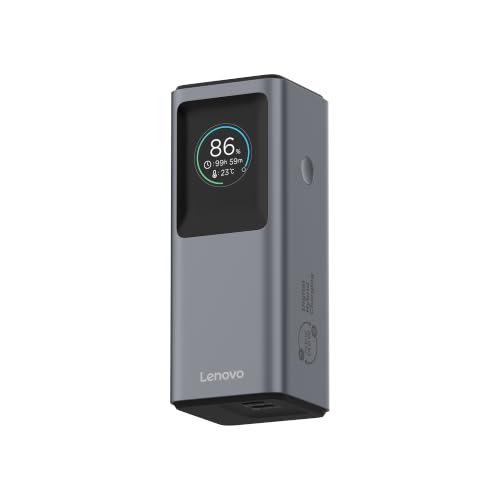
- Battery and 65W wall charger in one
- Two USB-C ports with up to 65W standard output
- 140W stated output requires hybrid mode
Best For: USB-C laptop charging at outlets and on the go
Solar Kit
JIYHF 100W Power Station with 30W Panel

- 99.9Wh battery and included 30W panel
- 100W AC and 65W USB-C PD outputs
- Panel junction box must stay dry
Best For: Camping and outdoor work with solar recharging
Travel AC Charger

- 98Wh capacity with a 100W AC outlet
- 65W USB-C input and output
- Two additional USB-A ports
Best For: Travelers needing AC and USB laptop charging
Best for Extended Trips – LHUOED 50,000mAh All-in-One Charger
If you want a hybrid portable power bank that combines a wall plug, built-in cables, and substantial backup capacity, this LHUOED model covers all three. Its 50,000mAh rating suits extended time away from outlets, though its size makes it better suited to a bag than a pocket.
Best For: Road trips, camping, and emergency kits where capacity and fewer loose cables matter most.
Pros:
- Built-in USB-C and iOS cables, plus USB-C and USB-A ports, can charge four devices at once.
- Foldable AC plug offers wall recharging; USB-C input provides another recharge option.
- Built-in USB-C cable supports up to 22.5W output; backed by a three-year warranty.
Cons:
- At 6.54 × 3.54 × 1.5 inches, it takes up more bag space than smaller alternatives.
- Its listed 50,000mAh capacity may exceed airline carry-on battery limits; check your airline before flying.
The main appeal is reducing what you pack while keeping a large reserve of power. Choose it for ground travel and longer outings rather than as a pocket-size daily charger.
Best Compact High-Capacity Pick – Sucrosey 50,000mAh Wall-Plug Power Bank
This hybrid portable power bank pairs a listed 50,000mAh battery with a foldable AC plug and built-in USB-C and iOS cables. At about 4.6 × 2.8 × 1.2 inches, it offers a relatively compact way to carry substantial backup power without packing a separate wall adapter.
Best For: Travelers who want a high-capacity charger with cables and an AC plug built in.
Pros:
- Foldable plug recharges from a 100–240V outlet in about six hours, according to the listing.
- Built-in cables reduce the need to pack separate phone cords.
- USB-C cable, USB-C port, and USB-A port each support up to 22.5W output.
Cons:
- At a listed 0.79 lb, it is heavier than its small dimensions may suggest.
- Its listed 50,000mAh capacity may exceed airline carry-on battery limits; verify before flying.
Its defining advantage is the combination of compact dimensions and all-in-one charging hardware. It makes the most sense for road trips or other travel where airline battery restrictions are not a concern.
Best Pocket-Friendly Wall Charger – Anker Prime 9,600mAh 65W Fusion
The Anker Prime is a hybrid portable power bank for buyers who prioritize charging speed and portability over maximum battery capacity. Its built-in AC plug lets it serve as a wall charger, while two USB-C ports deliver up to 65W when one port is in use.
Best For: Everyday carry and short trips where a compact wall charger and backup battery can replace two separate devices.
Pros:
- Up to 65W output from a single port.
- Compact 10.72-ounce design with a built-in AC plug.
- 1.3-inch LCD shows battery level and power output; USB-C cable and travel pouch are included.
Cons:
- 9,600mAh capacity offers less backup energy than the larger banks in this roundup.
- With both ports in use, output is limited to up to 45W on USB-C1 and 20W on USB-C2.
Pick this model if you would rather carry one small charger for outlets and on-the-go top-ups. The dual-port power split is worth noting if you plan to charge two devices at once.
Best for High-Power Laptops – Lenovo 20,000mAh 140W Power Bank
Lenovo takes a different approach to the hybrid portable power bank: its digital hybrid charging system is designed to manage battery and DC power modes, rather than provide a built-in wall plug. The 20,000mAh capacity and up to 140W single-port USB-C output make this the laptop-focused option in the lineup.
Best For: Laptop users who need high USB-C output, charging data, and room to connect a phone or tablet.
Pros:
- USB-C1 supports up to 140W when charging a laptop separately.
- Two USB-C ports and one USB-A port support up to three connected devices, with 135W total output specified for multi-device use.
- 2.01-inch TFT display shows remaining capacity and input/output power; a 5-foot, 240W-rated USB-C cable is included.
Cons:
- No built-in AC plug or integrated charging cable is listed.
- At 16 ounces, it is less suited to pocket carry than smaller chargers.
This is the strongest fit when laptop wattage matters more than all-in-one wall charging. Check your laptop’s USB-C charging requirements to determine whether its 140W single-port capability is useful for your setup.
Compact AC Backup – ZeroKor 120W Portable Power Station
For shoppers considering a hybrid portable power bank with household-style outlets, this ZeroKor station pairs a 97.6Wh battery with two AC outlets rated at 120W maximum. It also has USB-C, USB-A, and DC outputs for smaller electronics.
Best For: Camping or short power outages when you need to charge phones, cameras, or other devices drawing under 120W.
Pros:
- Two AC outlets plus USB-C, USB-A, and DC connections.
- Weighs about 2.2 pounds and has a carry handle.
- Supports USB-C, car, and optional solar recharging; includes an LED light and status display.
Cons:
- Not suitable for appliances drawing over 120W.
- Solar panel is not included.
This is a portable option when AC flexibility matters more than running high-wattage appliances. Check your device’s power draw before plugging it in.
Wall-and-Battery Hybrid – Lenovo Hybrid 2-in-1 Laptop Power Bank
The Lenovo is a hybrid portable power bank in the literal sense: it combines a 10,200mAh battery with a foldable-plug wall charger. Its two USB-C ports make it a compact choice for charging a laptop and other USB-C devices while traveling.
Best For: Travelers who want one device for wall charging and battery-powered USB-C charging.
Pros:
- Combines a portable battery and 65W wall adapter.
- Offers up to 65W standard output and a stated 140W hybrid mode.
- IPS display shows battery and charging information.
Cons:
- 140W output requires hybrid mode rather than battery-only operation.
- USB-C-only ports offer no built-in AC outlet for other devices.
Pick this for its plug-in versatility, not as a 140W battery-only charger. Its 36.72Wh battery is geared toward portable charging rather than extended off-grid use.
Solar Kit – JIYHF 100W Power Station with 30W Panel
If your idea of a hybrid portable power bank includes both plug-in and solar recharging, this JIYHF kit includes a 99.9Wh power station and a 30W foldable panel. A 100W AC outlet and 65W USB-C PD port cover a range of small-device charging needs.
Best For: Outdoor work or camping where access to wall power is limited and a solar panel is useful.
Pros:
- Includes a 30W foldable solar panel rather than requiring a separate purchase.
- Provides AC, USB-C, USB-A, and 12V DC outputs.
- Supports car charging and a stated two-hour recharge using a 65W-or-higher USB-C charger.
Cons:
- AC output is limited to 100W.
- Solar panel junction box is not waterproof.
The included panel makes this a convenient starter kit for off-grid charging, but keep the panel’s junction box dry and match AC devices to the 100W limit.
Travel AC Charger – Paopaoyu 98Wh AC Power Bank
This Paopaoyu hybrid portable power bank gives travelers both a 100W AC outlet and a 65W USB-C PD port in a 98Wh battery. Two additional USB-A ports let you charge smaller devices alongside a laptop or other electronics.
Best For: Business travel or backup charging when you need an AC outlet as well as USB charging.
Pros:
- Four outputs: 100W AC, 65W USB-C PD, and two USB-A ports.
- USB-C supports both 65W output and input.
- Stated 1.5-hour full recharge through the USB-C port.
Cons:
- AC-powered devices must draw less than 100W.
- No solar charging option is specified in the supplied details.
Its AC outlet is the draw if your gear cannot charge over USB-C. For flights, the stated 98Wh capacity is below 100Wh, but check your airline’s current battery rules before departure.
How We Picked These Hybrid Portable Power Banks
We grouped the eight selected products by the jobs they are designed to do: wall-plug convenience, USB-C laptop charging, and portable AC power. We compared their stated battery capacities, output ratings, charging connections, and portability-related features. Those specifications help narrow the field, but they are not a substitute for independent runtime testing. Check the current listing and your devices’ charging requirements before buying.
Quick Comparison: Which Type Fits Your Trip?
For a lighter daily carry: The Anker Prime 9,600mAh and Lenovo Hybrid 10,200mAh combine portable charging with a wall-plug or wall-adapter function. They prioritize convenience over the longest unplugged runtime.
For USB-C laptop charging: The Lenovo 20,000mAh 140W model offers a higher stated output. The 98Wh/27,000mAh AC-outlet bank offers both USB-C PD and an AC socket for devices that cannot charge directly over USB-C.
For longer phone-focused use: The two 50,000mAh models emphasize stated capacity and built-in charging features. Confirm their USB-C output before assuming either will suit a laptop.
For occasional AC power: The 120W portable power station, 98Wh AC-outlet bank, and JIYHF station serve devices that need a household-style outlet. The JIYHF package also includes a foldable solar panel.
Key Buying Factors for a Hybrid Portable Power Bank
Match Output to the Device
Look at the wattage available from the specific port you plan to use, not just the largest number in a product name. A laptop that expects 65W or more may charge slowly—or not at all—from a lower-output USB-C port. For AC devices, compare the outlet’s continuous wattage with the device’s power requirement; high-draw appliances are generally beyond the scope of compact stations.
Read Capacity in Watt-Hours
Milliamp-hour figures are useful for comparing similar batteries, but watt-hours provide a better cross-category reference. Expect less usable energy at your device than the battery’s rated capacity because conversion and charging create losses. If you fly, check your airline’s current battery rules, especially for models near 100Wh and for larger-capacity banks whose watt-hour rating is not clear.
Decide Which Hybrid Feature You Need
A built-in wall plug cuts down on separate charging gear. Built-in cables can simplify phone charging, but confirm that their connector types match your devices. An AC outlet adds flexibility for proprietary chargers, with added bulk and conversion losses. A bundled solar panel can help away from outlets, though its real-world charging rate depends on sunlight and setup.
Who Should Buy Which Hybrid Portable Power Bank?
Choose a compact plug-in model if you move between outlets and want fewer pieces to pack. Choose a clearly rated USB-C model if reliable laptop charging is the priority. Consider a high-capacity bank for extended phone and tablet use, provided its size and travel restrictions work for you. Pick an AC-outlet model only when a device genuinely needs AC power, and consider the solar-equipped station for outdoor backup where recharging from the grid may be difficult.