Choosing the right bike computer with Strava support comes down to more than just price. The best options balance GPS accuracy, battery life, sensor compatibility, and easy ride syncing.
Below, you’ll find a curated roundup of the strongest picks for 2026, whether you want advanced training tools, reliable navigation, or a simple wireless computer that uploads rides without hassle.
Best 10 Bike Computers with Strava Picks for 2026
Adaptive Training GPS
Garmin Edge 540 Compact Cycling Computer

- Button controls with compact 2.6-inch display
- Up to 26 hours battery; 42 in saver mode
- Multi-band GNSS plus coaching and ClimbPro
Best For: Riders who want compact navigation and advanced training guidance
Route Import Navigator
iGPSPORT BSC200S GPS Bike Computer

- Imports routes from Strava, Ride with GPS, and Komoot
- 2.4-inch color display with one-touch navigation
- IPX7 waterproofing and up to 25 hours battery
Best For: Budget-conscious riders who want Strava route import and easy navigation tools
Premium Ride Command Center
Garmin Edge 1050 Touchscreen Computer

- Large 3.5-inch vivid touchscreen with speaker
- Up to 20 hours battery; 60 in saver mode
- Road hazard alerts, group ride tools, Garmin Coach
Best For: Serious cyclists who want a large touchscreen, advanced ride tools, and premium connectivity
Compact Ride Tracker
CYCPLUS G1 Wireless GPS Bike Computer

- Lightweight 70g body with 2.0-inch screen
- Up to 50 hours battery life
- Automatic backlight and IPX6 waterproofing
Best For: Riders who want a small, basic GPS computer with long battery life
Premium Navigation Pick
Wahoo ELEMNT Bolt V3 GPS Cycling Computer

- Auto-downloads Strava routes and uploads rides
- Turn-by-turn navigation with LEDs and alerts
- Works with radar, LiveTrack, and smart notifications
Best For: Riders who want a compact GPS computer with strong Strava syncing and navigation
Long-Battery Budget Pick
CYCPLUS GPS Wireless Bike Computer M2

- Supports Strava syncing through the CYCPLUS FIT app
- Up to 70 hours of battery life
- Displays 12 data fields and supports ANT+ devices
Best For: Budget-minded riders who want long battery life and simple Strava syncing
Touchscreen Navigation Pick
COOSPO Color Touchscreen GPS Bike Computer CS600

- Color touchscreen with auto-backlight
- Auto-syncs ride data to Strava and TrainingPeaks
- Built-in route navigation plus radar compatibility
Best For: Riders who want a touchscreen GPS computer with route navigation and Strava syncing
Value Pick
iGPSPORT BSC100MAX 3-inch GPS Bike Computer

- Shares ride data to Strava via iGPSPORT app
- 3-inch anti-glare screen for easier viewing
- 40-hour battery life with auto start/stop recording
Best For: Budget-conscious riders who want a large-screen GPS computer with simple Strava sharing
Balanced Upgrade
iGPSPORT BSC100S Wireless GPS Bike Computer

- Shares ride data to Strava through iGPSPORT app
- ANT+ and Bluetooth 5.0 support many sensors
- 2.6-inch anti-glare display with 40-hour battery life
Best For: Riders who want compact dimensions, dual-protocol connectivity, and easy Strava syncing
Budget Route Sync
COOSPO BC107 GPS Bike Computer
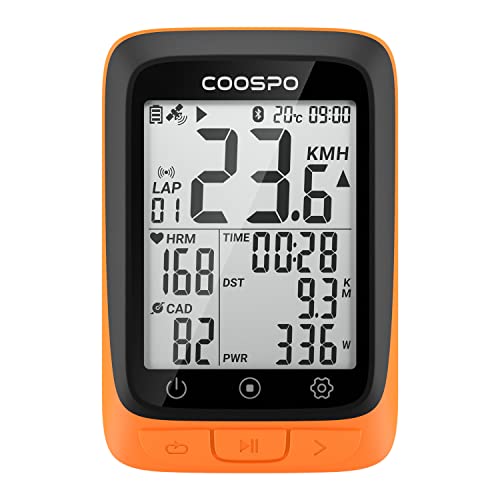
- Syncs ride files to Strava through CoospoRide app
- ANT+ sensor support for HR, speed, cadence, and power
- Compact 2.4-inch display with GPS/Beidou positioning
Best For: Budget riders who want simple Strava syncing and ANT+ sensor compatibility
Adaptive Training GPS – Garmin Edge 540 Compact Cycling Computer
If you want bike computers with strava-friendly tracking and a stronger focus on training, the Garmin Edge 540 is built for riders who care about structured workouts, navigation, and performance metrics. Its button controls, multi-band GNSS, and coaching tools make it a practical pick for everyday training and longer rides.
Best For: Riders who want compact navigation and advanced training guidance without a touchscreen.
Pros:
- Up to 26 hours of battery life, or up to 42 hours in battery saver mode.
- Multi-band GNSS improves positioning accuracy in challenging environments.
- Adaptive coaching, workout prompts, and stamina insights support structured training.
- ClimbPro, power guide, and ride-type maps add useful ride planning detail.
Cons:
- Button-only control may feel less convenient than a touchscreen for some riders.
- Several advanced training features work best with a compatible power meter and heart rate monitor.
The Edge 540 is a strong fit if you want a compact, reliable computer that leans into data and guidance rather than flashy extras. It covers navigation and training very well, and it has the battery life to handle demanding rides.
Route Import Navigator – iGPSPORT BSC200S GPS Bike Computer
For riders looking at bike computers with strava support on a budget, the iGPSPORT BSC200S stands out for route import and straightforward ride tracking. It can pull in third-party routes from Strava, Ride with GPS, and Komoot, while also giving you a clear 2.4-inch display and useful ride notifications.
Best For: Budget-conscious riders who want Strava route import and easy navigation tools.
Pros:
- Imports routes from Strava, Ride with GPS, and Komoot.
- One-touch navigation and back-to-start support make route start-up simple.
- IPX7 waterproofing and up to 25 hours of battery life suit longer rides.
- Supports over 100 riding data fields and custom display pages in the app.
Cons:
- Does not offer the premium training ecosystem of higher-end Garmin units.
- Type-C cable is not included in the box.
The BSC200S is a practical option if your priority is getting Strava routes onto the device and riding without extra fuss. It keeps the feature set useful and focused, especially for riders who want navigation and basic data in one package.
Premium Ride Command Center – Garmin Edge 1050 Touchscreen Computer
If you’re comparing bike computers with strava-style ride tracking and want the most complete Garmin experience here, the Edge 1050 is the premium pick. It combines a vivid touchscreen, advanced navigation, group ride features, and detailed coaching tools in a device designed for riders who want more from every mile.
Best For: Serious cyclists who want a large touchscreen, advanced ride tools, and premium connectivity.
Pros:
- Large 3.5-inch capacitive touchscreen makes planning and riding easier to manage.
- Up to 20 hours of battery life, or up to 60 hours in battery saver mode.
- Built-in speaker, bike bell, and group ride messaging add practical on-road features.
- Road hazard alerts, ClimbPro, power guide, and Garmin Coach support advanced riding.
Cons:
- It is one of the more expensive and feature-heavy choices in this group.
- Some of the best coaching and connected features depend on a compatible smartphone and sensors.
The Edge 1050 is the most fully loaded option here, especially if you value a vivid display and a deep feature set. It is best for riders who want premium navigation, performance tools, and connected ride features in one device.
Compact Ride Tracker – CYCPLUS G1 Wireless GPS Bike Computer
If you want a simple option among bike computers with strava-adjacent basics like GPS ride logging, the CYCPLUS G1 keeps things lightweight and straightforward. It focuses on core ride stats, automatic backlight visibility, and long battery life without adding complexity.
Best For: Riders who want a small, basic GPS computer with long battery life.
Pros:
- Lightweight 70g design with a compact 2.0-inch screen.
- Up to 50 hours of battery life for extended use.
- Automatic backlight and FSTN display improve visibility in sun or darkness.
- IPX6 waterproofing and wireless design reduce handlebar clutter.
Cons:
- It is a more basic computer with fewer advanced navigation or training features.
- Display is smaller and simpler than the color screens on some rivals.
The G1 makes sense if you mostly want dependable GPS ride data in a small, affordable package. It is not the most advanced model here, but it does the essentials well and stays easy to live with.
Premium Navigation Pick – Wahoo ELEMNT Bolt V3 GPS Cycling Computer
If you want a bike computer with Strava integration that feels polished and easy to use, the Wahoo ELEMNT Bolt V3 is built around route syncing, turn-by-turn guidance, and automatic ride uploads. It works with routes imported from Strava, Ride With GPS, and Komoot, and it can also generate routes on demand from the device or companion app.
Best For: Riders who want a compact GPS computer with strong Strava syncing, navigation, and automatic uploads.
Pros:
- Automatically downloads saved routes from compatible accounts, including Strava.
- Uploads completed rides to authorized third-party accounts.
- Provides turn-by-turn navigation with on-device prompts, LEDs, and audible cues.
- Includes smart notifications, LiveTrack support, and ANT+ radar integration.
Cons:
- 2.3-inch LCD screen is smaller than touchscreen rivals.
- Does not use touchscreen controls; it relies on buttons.
- Premium feature set may be more than casual riders need.
This is a strong choice if your priority is dependable route handling and hands-off syncing with Strava-supported services. It balances navigation, ride sharing, and safety features in a compact unit.
Long-Battery Budget Pick – CYCPLUS GPS Wireless Bike Computer M2
The CYCPLUS M2 is a practical bike computer with Strava support for riders who want long battery life and simple wireless syncing without paying for extra features they may not use. It records ride data, syncs through the CYCPLUS FIT app, and can push workouts to Strava, making it a straightforward option for everyday training and tracking.
Best For: Budget-minded riders who want long battery life and basic Strava syncing.
Pros:
- Up to 70 hours of battery life for long rides and fewer charges.
- Supports Bluetooth syncing to the CYCPLUS FIT app and Strava.
- Displays up to 12 data fields across 3 switchable screens.
- Compatible with ANT+ devices and has IPX6 water resistance.
Cons:
- No touchscreen; control is button-based.
- Navigation features are not as advanced as premium route-first computers.
- Smaller feature set if you want deeper ecosystem integration.
If you mainly want reliable ride data and easy Strava upload support, the M2 delivers good value. Its long runtime and broad data display make it a solid pick for consistent training rides.
Touchscreen Navigation Pick – COOSPO Color Touchscreen GPS Bike Computer CS600
The COOSPO CS600 is a feature-rich bike computer with Strava support for riders who want a color touchscreen, route navigation, and automatic ride syncing in one device. It pairs with the COOSPORIDE app to sync ride data to Strava and TrainingPeaks, while also offering built-in route tools and a customizable data layout.
Best For: Riders who want a touchscreen GPS computer with route navigation and Strava syncing.
Pros:
- 2.4-inch color touchscreen with auto-backlight for easier viewing.
- Syncs ride data automatically to Strava and TrainingPeaks through the app.
- Built-in route navigation with uploaded routes or breadcrumb following.
- 36-hour battery life, IPX7 waterproofing, and support for radar and other cycling gear.
Cons:
- Does not include extra sensors or extension mounts.
- Cadence, heart rate, and power tracking require separate compatible accessories.
- At 120 g, it is heavier than some smaller GPS computers.
For riders who want a modern touchscreen interface and route guidance alongside Strava uploads, the CS600 offers a well-rounded package. It is especially appealing if you like customizing your display and plan to expand with compatible accessories later.
Value Pick – iGPSPORT BSC100MAX 3-inch GPS Bike Computer
If you want bike computers with Strava support without paying for a premium head unit, the iGPSPORT BSC100MAX covers the practical essentials well. It offers global 5-satellite positioning, a large 3-inch anti-glare screen, and automatic start/stop recording, making it easy to use on everyday rides and longer outings.
Best For: Riders who want a budget-friendly GPS computer with a large screen, simple auto-recording, and Strava sharing.
Pros:
- Shares ride data to Strava and Komoot through the iGPSPORT app
- 3-inch anti-glare display is easier to read while riding
- Auto start/stop recording helps keep trip data accurate
- 40-hour battery life and IPX7 waterproofing suit longer rides
Cons:
- Strava sharing depends on using the iGPSPORT app
- Uses button controls rather than a touchscreen
Overall, the BSC100MAX is a straightforward option if you mainly want dependable GPS tracking, plenty of ride metrics, and easy Strava syncing in a simple package.
Balanced Upgrade – iGPSPORT BSC100S Wireless GPS Bike Computer
The iGPSPORT BSC100S is a solid middle-ground choice for bike computers with Strava support, especially if you want wireless convenience and broad sensor compatibility. It combines 5-satellite positioning, a 2.6-inch anti-glare display, and app-based data analysis so your rides are easy to track and share.
Best For: Riders who want a compact GPS bike computer with reliable app syncing and dual-protocol sensor support.
Pros:
- Shares ride data to Strava and Komoot through the iGPSPORT app
- ANT+ and Bluetooth 5.0 support work with many sensors and smart watches
- 2.6-inch anti-glare screen keeps the unit compact
- 40-hour battery life and IPX7 waterproofing add everyday practicality
Cons:
- Type-C cable is not included in the box
- Smaller display than the BSC100MAX may be less convenient for some riders
If you want a compact computer that still covers the basics well, the BSC100S offers a good mix of readability, sensor support, and Strava syncing for regular training or weekend rides.
Budget Route Sync – COOSPO BC107 GPS Bike Computer
The COOSPO BC107 is a practical pick if you want bike computers with Strava support and a low-frills setup. It uses GPS and Beidou positioning, supports ANT+ sensors, and syncs ride files to Strava through the CoospoRide app, which keeps the workflow simple for riders who mainly want recording and analysis.
Best For: Budget buyers who want a compact GPS computer with ANT+ sensor support and app-based Strava syncing.
Pros:
- Syncs activity files to Strava through the CoospoRide app
- Supports ANT+ sensors for heart rate, speed, cadence, and power
- Compact 2.4-inch display and lightweight build
- GPS/Beidou positioning and indoor cycling mode add flexibility
Cons:
- Bluetooth is for app pairing only, not direct sensor connections
- Strava uploads must go through the phone app rather than USB to PC
For riders focused on affordability and core cycling data, the BC107 delivers useful GPS tracking and Strava compatibility without adding unnecessary complexity.
How We Picked These Bike Computers with Strava
We focused on models that make Strava syncing practical and dependable, along with the features riders actually use most: accurate GPS, clear displays, reliable wireless connectivity, solid battery life, and support for common sensors and accessories.
We also weighed ease of setup, navigation quality, waterproofing, and overall value. That matters because a great bike computer should be simple to live with on daily rides, long training sessions, and weekend adventures.
Quick Comparison
Premium models like the Garmin Edge 1050 and Wahoo ELEMNT Bolt V3 are best for riders who want polished navigation, strong app ecosystems, and training features. Midrange options such as the Garmin Edge 540 and several iGPSPORT or CYCPLUS units aim to deliver dependable core performance at a lower cost. Budget-friendly COOSPO and iGPSPORT picks are attractive if you mainly want GPS tracking, wireless syncing, and Strava uploads without paying for advanced extras.
Key Buying Factors for Bike Computers with Strava
Strava Sync Method
Look for a computer that supports automatic uploads through its companion app or direct integration. The smoother the sync process, the less likely you are to skip ride uploads.
Navigation and Mapping
If you ride unfamiliar routes, prioritize turn-by-turn navigation, course guidance, and readable maps. Riders who stay on known roads may be fine with simpler breadcrumb-style routing.
Display and Interface
Screen size, brightness, and button or touchscreen controls all affect usability. Touchscreens can be convenient, but button controls may work better in wet weather or with gloves.
Battery Life and Durability
Long rides and all-day events call for strong battery life. Waterproof ratings also matter if you ride in rain or leave your bike computer mounted outdoors.
Sensor and App Compatibility
Check for Bluetooth and ANT+ support if you use heart rate monitors, cadence sensors, power meters, or smart trainers. Better compatibility gives you more room to grow with your training.
Who Should Buy Which Bike Computers with Strava?
Choose a premium Garmin or Wahoo model if you want the best navigation, training ecosystem, and long-term feature support. Pick a midrange Garmin, CYCPLUS, or iGPSPORT option if you want a balanced mix of performance and price. Go with COOSPO or entry-level iGPSPORT models if your main goal is straightforward GPS tracking, wireless connectivity, and easy Strava uploads at the lowest practical cost.
In short, the best Bike Computers with Strava are the ones that fit your riding style. Match the device to how you ride now, and you’ll get far more value than paying for features you won’t use.