Hybrid thermal imaging binoculars combine thermal detection with digital night-vision or multispectral viewing, giving buyers a flexible tool for low-light and all-weather observation. They are especially useful when you need both heat signatures and visual detail in one optic.
In this roundup, we focus on standout options with practical features like laser range finding, high-resolution sensors, and day/night versatility to help you choose with confidence.
Best 10 Hybrid Thermal Imaging Binoculars Picks for 2026
Dual-Spectrum Hunting Tech
AGM ObservIR LRF 4K Binoculars

- Thermal plus digital day/night viewing
- 1,000 m built-in laser rangefinder
- GPS, compass, Wi-Fi, and 64 GB storage
Best For: hunters wanting dual-spectrum imaging with integrated rangefinding
Compact Thermal Scout
TOPDON TS004 Thermal Monocular

- 256x192 thermal image with 50Hz refresh
- Up to 11 hours of battery life
- Wi-Fi app support and IP67 protection
Best For: solo outdoor users who want a rugged thermal monocular
Long-Range Thermal Observer
Pulsar Merger LRF XT50 Binoculars

- 1280x1024/12µm HD thermal sensor
- Rangefinding up to 1640 yards
- Stabilization plus recording and Wi-Fi
Best For: long-range observers who want premium thermal detail and stability
Multi-Spectrum Field View
ATN Binox 6 Dual Multispectral Binoculars
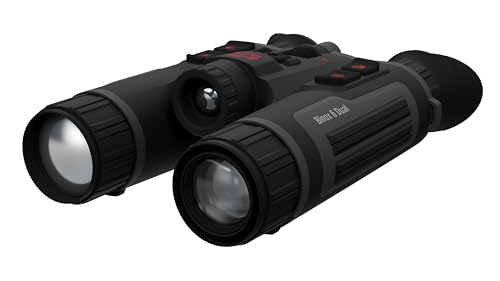
- 4K day plus IR night, twilight, and thermal
- 640x512 thermal with ≤15 mK NETD
- Built-in LRF, WiFi, and 64 GB storage
Best For: buyers wanting a 4-in-1 binocular for day, night, twilight, and thermal viewing
Premium Long-Range Thermal Pick
Pulsar Merger LRF XP35 Thermal Binoculars

- 640x480 thermal sensor for clear imaging
- 1800m detection range with 1000m LRF
- Magnesium alloy build with IPX7 waterproofing
Best For: Hunters and field users needing long-range thermal detection with built-in ranging
Budget Rangefinder Thermal Option
i4SEE B50-640 LRF Thermal Binoculars
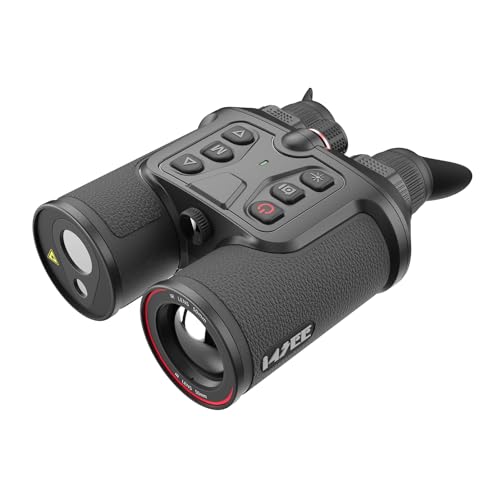
- 640x480 thermal resolution
- 600m laser rangefinder accuracy
- Waterproof and tripod compatible
Best For: Hunters and shooters wanting a simpler thermal binocular with ranging support
Most Versatile Dual-Spectrum Choice
AGM ObservIR LRF Dual-Spectrum Binoculars

- Thermal plus 4K day/night optical channels
- 1800m detection with 1000m LRF
- GPS, compass, Wi-Fi, and 64GB recording
Best For: Tactical, wildlife, and search-and-rescue users needing multi-mode visibility
ATN Pick
4-in-1 thermal binoculars with 4K daylight
- Day, night, thermal, and twilight modes
- 256x192 thermal sensor with <=20 mK NETD
- Built-in 1000-yard LRF and 4K recording
Best For: Users who want one binocular for scanning, ranging, and recording in changing light.
Premium Multispectral Choice
Multispectral binoculars with 1280 thermal

- 1280x1024 thermal sensor with <40 mK sNETD
- Thermal, digital, PiP, and overlay modes
- Built-in LRF to 1,640 yards with +/-1 yard accuracy
Best For: Buyers seeking premium thermal detail and integrated distance measurement.
AGM Dual-Spectrum Pick
Dual-spectrum 4K thermal binoculars
- 640x512 thermal channel with sub-15 mK sensitivity
- 4K optical day/night channel with 60mm lens
- Built-in 1,000 m LRF plus GPS and Wi-Fi
Best For: Hunters and field professionals who need thermal detection and optical verification.
Dual-Spectrum Hunting Tech – AGM ObservIR LRF 4K Binoculars
If you want hybrid thermal imaging binoculars that combine thermal detection with a digital day/night view, the AGM Global Vision ObservIR LRF is built for flexible field use. It pairs a 12µm VOx thermal sensor with a 3840×2160 ultra-low-light optical channel, so you can switch between heat detection and detailed visual identification as conditions change.
Best For: Hunters and outdoor users who want dual-spectrum viewing plus integrated ranging and navigation.
Pros:
- Dual-spectrum design combines thermal and digital day/night imaging.
- Built-in laser rangefinder measures distances up to 1,000 meters.
- 4K optical channel and 1920×1080 OLED display support clearer viewing.
- Includes GPS, digital compass, Wi-Fi, and 64 GB internal storage.
Cons:
- Thermal sensor resolution is 256×192, which is lower than higher-end premium models.
- Heavier and more complex than a simple monocular or standard binocular.
Overall, this is a strong pick if you want one device that handles thermal scanning, low-light observation, recording, and distance measurement in a single rugged package.
Compact Thermal Scout – TOPDON TS004 Thermal Monocular
The TOPDON TS004 is a practical thermal imaging monocular for buyers who want a lighter, simpler way to scan heat signatures on the move. It uses a 256×192 IR resolution with a 50Hz refresh rate, a 13mm lens, and wireless phone connectivity for live monitoring and recording through the app.
Best For: Solo users who want a compact thermal monocular for hunting, hiking, or general outdoor spotting.
Pros:
- 256×192 IR resolution with smooth 50Hz thermal viewing.
- Up to 11 hours of battery life from the 5000mAh battery.
- Wireless app connection supports live monitoring, photos, and video with audio.
- IP67 waterproof design and drop resistance support rugged outdoor use.
Cons:
- It is a monocular, so it lacks the two-eye viewing format of binoculars.
- Detection range is more limited than larger long-range thermal optics.
For users who prioritize portability and straightforward thermal scanning, the TS004 offers a sturdy, app-connected option without the bulk of full binocular systems.
Long-Range Thermal Observer – Pulsar Merger LRF XT50 Binoculars
For buyers comparing hybrid thermal imaging binoculars, the Pulsar Merger LRF XT50 stands out for its high-detail thermal sensor and long-range measurement tools. It uses a 1280×1024/12µm HD thermal sensor, built-in image stabilization, and a laser rangefinder that reaches up to 1640 yards, making it a serious observation tool for distant targets.
Best For: Long-range users who want high-resolution thermal binoculars with recording and stabilization.
Pros:
- 1280×1024/12µm HD thermal sensor delivers detailed imagery.
- Built-in laser rangefinder reaches up to 1640 yards.
- Image stabilization helps keep views crisp and steady.
- Includes 64GB memory, photo/video recording, and Stream Vision 2 Wi-Fi support.
Cons:
- Higher-end capability will likely put it above entry-level budgets.
- Export control notice may matter for some buyers.
This model is well suited to users who want a premium thermal binocular setup with strong detail, stable viewing, and practical smart-device connectivity.
Multi-Spectrum Field View – ATN Binox 6 Dual Multispectral Binoculars
The ATN Binox 6 is a feature-heavy option for shoppers looking for hybrid thermal imaging binoculars with both visual and thermal coverage. It combines 4K day, IR night, and twilight viewing with a 640×512 thermal sensor rated at ≤15 mK NETD, plus a built-in 1000-yard laser rangefinder for longer-distance use.
Best For: Users who want a 4-in-1 binocular with strong thermal detail, built-in ranging, and recording features.
Pros:
- 4K day, IR night, twilight, and 640×512 thermal imaging in one device.
- ≤15 mK NETD thermal sensitivity supports fine heat-detail detection.
- Built-in 1000-yard laser rangefinder adds practical distance measurement.
- Includes WiFi, 64 GB storage, tripod mount, and magnesium construction.
Cons:
- Feature-rich design may be more than casual users need.
- Maximum magnification and advanced functions can add complexity.
If you want one binocular to cover day, night, twilight, and thermal observation, the Binox 6 offers a broad set of tools in a relatively portable magnesium body.
Premium Long-Range Thermal Pick – Pulsar Merger LRF XP35 Thermal Binoculars
If you’re shopping for hybrid thermal imaging binoculars with serious reach, the Pulsar Merger LRF XP35 is built for detailed detection at distance. Its 640×480 thermal sensor, 1800-meter detection range, and built-in laser rangefinder make it a strong fit for users who want precision and clear situational awareness in the field.
Best For: Hunters and field users who want a compact thermal binocular with integrated ranging and long-distance detection.
Pros:
- 640×480 thermal sensor for detailed imaging clarity
- Detection range up to 1800 meters for long-distance viewing
- Built-in laser rangefinder measures up to 1000 meters
- Magnesium alloy body with IPX7 waterproof rating
Cons:
- Higher-end feature set may be more than casual users need
- 35mm objective lens is less focused on maximum light-gathering than larger optics
Overall, this model stands out as a rugged, field-ready option for buyers who prioritize range, thermal detail, and integrated distance measurement in one binocular package.
Budget Rangefinder Thermal Option – i4SEE B50-640 LRF Thermal Binoculars
The i4SEE B50-640 LRF is a practical choice if you want hybrid thermal imaging binoculars centered on hunting and shooting use. It combines a 640×480 sensor, a 50mm focal length, and an LRF rated for 600 meters of accuracy, giving you a straightforward setup for viewing heat signatures and checking distance.
Best For: Hunters and shooters who want a compact thermal binocular with rangefinding support and a simple manual-focus setup.
Pros:
- 640×480 thermal resolution for solid image detail
- 50mm focal length for a field-oriented viewing setup
- Built-in laser rangefinder with 600m accuracy
- Waterproof design and tripod compatibility
Cons:
- 6-degree field of view is relatively narrow
- Manual focus may be less convenient in fast-changing scenes
In practical terms, this is a focused tool for buyers who value thermal viewing and range estimation without extra complexity. It looks best suited to users who prefer a simpler hunting or shooting optic they can mount on a tripod when needed.
Most Versatile Dual-Spectrum Choice – AGM ObservIR LRF Dual-Spectrum Binoculars
If you want hybrid thermal imaging binoculars that can handle both day and night conditions, the AGM Global Vision ObservIR LRF is the most versatile model here. It pairs a 384×288 thermal sensor with a 3840×2160 digital optical channel, adds a built-in laser rangefinder, and is designed for users who need one device for multiple environments.
Best For: Tactical users, wildlife observers, and search-and-rescue teams that need thermal, digital, and ranging features in one binocular.
Pros:
- Dual-spectrum design with thermal and 4K optical channels
- Up to 1800m thermal detection and 1000m laser rangefinder
- Sub-15mK NETD thermal sensor with F1.0 35mm lens
- Wi-Fi, GPS, digital compass, recording, and 64GB internal memory
Cons:
- Feature-rich design may be more complex than basic thermal binoculars
- Tripod mount focus may matter more for steady use than handheld scanning
This is the strongest all-around option for buyers who want more than thermal alone. With its day/night optical channel, onboard navigation tools, and recording features, it is built for users who need a multifunction binocular rather than a single-purpose device.
ATN Pick – 4-in-1 thermal binoculars with 4K daylight
If you want hybrid thermal imaging binoculars that cover more than one job, the ATN Binox 6 Dual brings day, night, thermal, and twilight viewing into a single platform. It is built for users who need one device for scanning, identifying, and recording across changing light conditions, with thermal detection, 4K daytime optics, and built-in ranging.
Best For: Hunters, wildlife observers, and field users who want one binocular for daytime detail, nighttime viewing, and thermal scanning.
Pros:
- Four integrated modes: day, night, thermal, and twilight
- 256×192 thermal sensor with <=20 mK NETD for clearer heat signatures
- Built-in 1000-yard laser rangefinder with +/-1 m accuracy
- 4K daytime recording, 1080p thermal video, WiFi streaming, and 64 GB storage
Cons:
- Thermal resolution is lower than some higher-end dual-spectrum rivals
- Best suited to users who will use the device’s multiple modes regularly
Overall, the Binox 6 Dual is a versatile all-in-one choice if you value flexibility and mixed-mode observation over a simpler thermal-only setup. Its combination of AI enhancement, dual view, and recording features makes it a practical field tool for longer sessions.
Premium Multispectral Choice – Multispectral binoculars with 1280 thermal
The Pulsar Symbion LRF is a strong fit for buyers comparing hybrid thermal imaging binoculars with serious detection and identification capability. It combines thermal imaging, full-color digital optics, digital night vision, and a built-in rangefinder, so you can scan heat, confirm details, and measure distance without switching devices.
Best For: Users who want a premium multispectral binocular with high thermal resolution and integrated ranging.
Pros:
- 1280×1024 thermal sensor with <40 mK sNETD for strong contrast and detail
- Multiple viewing modes including thermal, digital, PiP, and overlay
- Built-in 905 nm laser rangefinder reaches up to 1,640 yards with +/-1 yard accuracy
- Rugged IP67 magnesium alloy housing with Wi-Fi, Bluetooth, and onboard recording
Cons:
- More advanced and specialized than a simple thermal-only binocular
- Heavier than some compact field models at 2.2 pounds
For buyers who want top-tier thermal detail and a broad multispectral toolset, the Symbion LRF stands out. Its mix of resolution, rangefinding, and connected features makes it especially compelling for demanding field use.
AGM Dual-Spectrum Pick – Dual-spectrum 4K thermal binoculars
The AGM ObservIR LRF is aimed at buyers who want hybrid thermal imaging binoculars with a clear split between thermal detection and 4K optical viewing. Its dual-spectrum design pairs a 640×512 thermal channel with a 4K day/night optical system, giving you the flexibility to detect heat signatures and then verify what you’re seeing in more detail.
Best For: Hunters and professional users who want thermal detection plus high-resolution optical confirmation.
Pros:
- 640×512 thermal channel with sub-15 mK sensitivity
- 4K optical channel with 60mm lens for daytime and low-light viewing
- Built-in 1,000 m laser rangefinder with Class 1 eye-safe design
- GPS, digital compass, Wi-Fi streaming, 64 GB memory, and IP67 protection
Cons:
- Feature-rich design may be more than casual users need
- Weighs more than simpler binocular options at 2.2 pounds
As a dual-spectrum option, the ObservIR LRF balances thermal detection, optical clarity, and field utility very well. It is a strong pick if you need a rugged, connected binocular that can handle both scouting and confirmation tasks.
How We Picked These Hybrid Thermal Imaging Binoculars
We prioritized performance that matters in the field: thermal resolution, optical clarity, display quality, range-finding capability, battery life, ergonomics, and real-world versatility. Because Hybrid Thermal Imaging Binoculars are built for more than one use case, we also looked for models that balance detection range with usable image detail and simple operation.
We favored products that make sense for hunters, property watchers, search-and-rescue users, and serious outdoor observers rather than niche specs that look good on paper but add little value in practice.
Quick Comparison
If you want maximum target separation and detail, look for higher thermal sensor resolution and a strong optical or digital daytime channel. If distance matters most, built-in laser range finding can be a major advantage. For mixed-use buyers, a multispectral or dual-spectrum design offers the most flexibility, while lighter monocular-style options are better when portability is the priority.
Key Buying Factors for Hybrid Thermal Imaging Binoculars
Thermal Resolution and Sensor Quality
Higher resolution generally means cleaner outlines, better target recognition, and more confidence at longer distances. NETD, lens size, and refresh rate also influence how smooth and sensitive the image feels.
Hybrid Viewing Modes
Look for systems that combine thermal with digital day/night or twilight imaging if you need both detection and identification. This is one of the biggest advantages of Hybrid Thermal Imaging Binoculars, especially in changing light conditions.
Range Finder and Magnification
A built-in laser range finder is useful for hunting, field navigation, and long-distance observation. Also check whether the magnification range fits your intended use; too much zoom can reduce field of view and make tracking harder.
Comfort, Controls, and Battery Life
Binocular-style designs tend to be easier on the eyes for extended viewing than single-eye devices, but weight and button layout still matter. Make sure the battery system and runtime match how long you plan to stay out.
Who Should Buy Which Hybrid Thermal Imaging Binoculars?
Hunters and long-range users should prioritize higher-resolution thermal sensors and an integrated range finder. Search and rescue teams may benefit most from dual-spectrum or multispectral models that improve detection in difficult conditions. Buyers who want the most portable solution should consider lighter thermal options, while those seeking the best all-around field utility should choose a true hybrid binocular design with multiple viewing modes and solid ergonomics.
For most shoppers, the best choice is the model that balances detection, identification, and comfort instead of chasing the highest spec in one category. That approach usually delivers the most useful Hybrid Thermal Imaging Binoculars for real-world use.