If you want flexible backup power, a hybrid generator gas and propane setup is one of the most practical choices. Dual-fuel models let you switch between fuel sources, which can simplify storage, extend runtime, and improve peace of mind during outages.
In this roundup, we focus on portable inverter and home-backup-friendly picks that balance wattage, noise, convenience, and RV or transfer-switch readiness.
Best 10 Hybrid Generator Gas and Propane Picks for 2026
Compact Dual-Fuel Inverter Choice
Westinghouse 4000W Super Quiet Inverter Generator

- 4000 peak / 3300 running watts
- Gasoline or propane powered
- Remote start, RV-ready, and USB outlets
Best For: RV trips and quiet essential backup
Mid-Size Home Backup Pick
Westinghouse 6500W Dual Fuel Generator
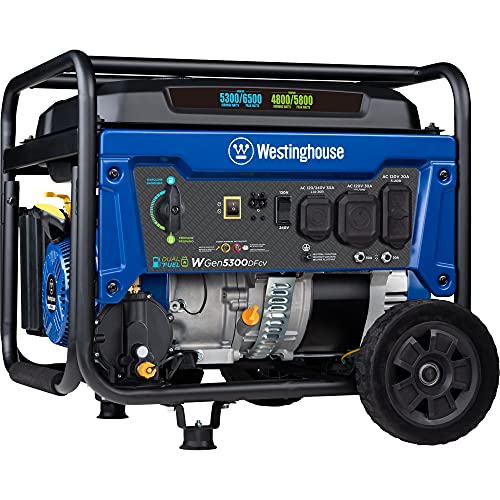
- 5300 running watts on gas, 4800 on propane
- Transfer-switch ready and RV-ready outlets
- Up to 14.5 hours of runtime
Best For: Residential backup and essential circuits
Lightweight Quiet RV Option
WEN 3600W Dual Fuel Inverter Generator

- Runs on gasoline or propane
- 49-pound inverter with RV outlet
- Quiet output and CO watchdog
Best For: Camping and RV travel
High-Power Home Backup Workhorse
Westinghouse 12500W Dual Fuel Generator

- 9500 running watts on gas
- 8500 running watts on propane
- Remote start with transfer-switch ready outlets
Best For: Large-home backup and heavier loads
RV-Ready Dual-Fuel Pick
Westinghouse 4650 Peak Watt Dual Fuel Portable Generator
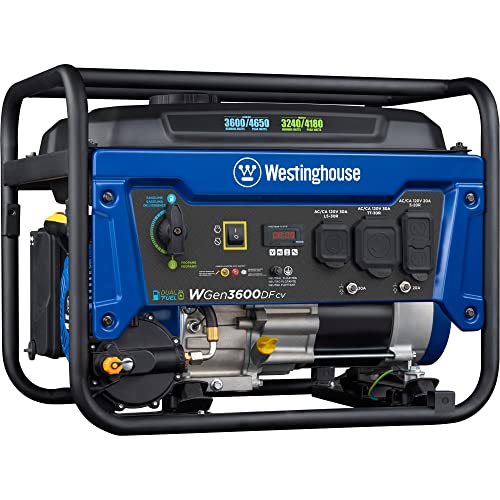
- Runs on gasoline or propane with 4650 peak watts
- Includes RV-ready TT-30R and 30A outlets
- Up to 14 hours runtime from a 4-gallon tank
Best For: RV and home backup buyers wanting mid-range dual-fuel power
Whole-Home Backup Power
DuroMax XP13000EH Dual Fuel Generator

- 13,000 starting watts and 10,500 running watts
- Push-button electric start with fast fuel switching
- Transfer switch-ready 50 amp outlet for backup power
Best For: Whole-home backup buyers needing high-output dual-fuel power
Compact Inverter Dual-Fuel Choice
ERAYAK 4500W Portable Inverter Generator

- 4500 peak watts on gas and 4050 peak watts on propane
- Compact 54-pound inverter design with pure sine wave power
- Runs at 58 dBA and includes a 30A RV outlet
Best For: Camping and RV users who want a quiet, portable dual-fuel inverter
Whole-Home Power Pick
DuroStar DS13000MX Dual Fuel Portable Generator

- 13,000W starting output for backup power
- Gasoline or propane for fuel flexibility
- Remote electric start with CO sensor
Best For: Home backup, transfer switch setups, and emergency readiness
Quiet Travel-Friendly Choice
Westinghouse 5000 Peak Watt Dual Fuel Inverter Generator

- 5000 peak watts with clean inverter power
- As low as 52 dBA for quieter operation
- RV-ready outlet plus remote electric start
Best For: Camping, travel trailers, and quiet essential backup
Practical Backup Generator
Westinghouse 4650 Peak Watt Dual Fuel Portable Generator

- 4650 peak watts with gas or propane
- Remote electric start with auto choke
- CO sensor and RV-ready outlet included
Best For: Residential backup power with easy starting and flexible fuel use
Compact Dual-Fuel Inverter Choice – Westinghouse 4000W Super Quiet Inverter Generator
If you want a hybrid generator gas and propane option that stays portable and quiet, this Westinghouse inverter is built for lighter home backup, camping, and RV use. It delivers 4000 peak watts, 3300 running watts, and clean power with less than 3% THD, plus remote start and multiple outlets for everyday essentials.
Best For: RV trips, camping, and smaller home backup loads where quiet operation matters.
Pros:
- Runs on gasoline or propane for flexible fueling.
- Remote, electric, and recoil starting options add convenience.
- RV-ready TT-30R outlet plus USB ports support travel and charging needs.
- Very quiet operation, listed as low as 52 dBA, with economy mode for better fuel efficiency.
Cons:
- 3300 running watts is best for essentials, not whole-home backup.
- 7-hour runtime is solid, but not as long as larger open-frame units.
This is a strong pick if you value portability, quieter operation, and clean power over maximum output. It fits well as an everyday dual-fuel inverter for travel trailers or selective home use.
Mid-Size Home Backup Pick – Westinghouse 6500W Dual Fuel Generator
This hybrid generator gas and propane model is aimed at homeowners who want dependable backup power with more output than a compact inverter. With 5300 running watts on gasoline and 4800 on propane, it gives you a practical balance of runtime, outlet selection, and transfer-switch readiness for residential use.
Best For: Home backup users who want a straightforward dual-fuel generator for outages and essential circuits.
Pros:
- Dual-fuel capability lets you run on gasoline or propane.
- Transfer switch ready L14-30R outlet and RV-ready TT-30R outlet add versatility.
- 4.7-gallon tank supports up to 14.5 hours of runtime.
- Includes wheel kit, oil, funnel, and propane hose for easier setup.
Cons:
- Open-frame design is louder and bulkier than inverter-style units.
- At 135.6 pounds, it is not a lightweight portable choice.
Overall, this model makes sense when you need more power and easier home integration than a small camping generator. It is built around practical backup use rather than ultra-quiet convenience.
Lightweight Quiet RV Option – WEN 3600W Dual Fuel Inverter Generator
For shoppers comparing a hybrid generator gas and propane setup for camping or RV travel, this WEN inverter stands out for its low weight and quiet operation. It runs on gasoline or propane, produces clean power for sensitive electronics, and includes RV-friendly outlets in a compact 49-pound package.
Best For: Campers and RV owners who want a quiet, lightweight dual-fuel inverter.
Pros:
- Dual-fuel operation supports gasoline and propane.
- Very quiet performance is designed for campsite-friendly use.
- Clean power is suitable for smartphones, tablets, and laptops.
- RV receptacle, USB ports, and CO watchdog add practical convenience and safety.
Cons:
- 2600 running watts on gasoline is better for lighter loads.
- 1.5-gallon tank limits runtime compared with larger generators.
This is a smart choice if portability and low noise matter more than raw output. It fits especially well for travel use where you want reliable power without hauling a heavier open-frame machine.
High-Power Home Backup Workhorse – Westinghouse 12500W Dual Fuel Generator
If your priority is a hybrid generator gas and propane option with serious backup capacity, this Westinghouse open-frame model is built for larger residential needs. It delivers 9500 running watts on gasoline and 8500 on propane, plus remote start and transfer-switch-ready outlets for more demanding outage scenarios.
Best For: Homeowners needing high-output backup power for multiple essential circuits.
Pros:
- High output on both fuels, with 9500 running watts on gas.
- Remote electric start and recoil start offer flexible starting methods.
- Transfer-switch ready and RV-ready outlets expand hookup options.
- 6.6-gallon tank supports up to 12 hours of runtime.
Cons:
- 210-pound weight makes it a stationary-style portable generator.
- Open-frame design is less compact than inverter alternatives.
This generator is geared toward users who want backup power with real reserve capacity, not just a camping-friendly portable. It offers a strong mix of output, runtime, and fuel flexibility for serious home use.
RV-Ready Dual-Fuel Pick – Westinghouse 4650 Peak Watt Dual Fuel Portable Generator
If you’re shopping for a hybrid generator gas and propane model for home backup or RV use, this Westinghouse unit offers a practical middle ground between portability and output. It runs on gasoline or propane, includes a CO sensor, and gives you a 30A RV-ready outlet plus a standard household duplex receptacle for flexible everyday use.
Best For: RV owners and homeowners who want a dual-fuel generator with straightforward setup and solid mid-range power.
Pros:
- 4650 peak watts on gasoline and 4650 peak watts on propane for flexible fuel choice.
- RV-ready TT-30R outlet plus 120V household duplex and L5-30R outlet.
- 4-gallon tank with up to 14 hours of runtime per tank.
- Includes oil, funnel, tool kit, user’s manual, and propane hose to get started.
Cons:
- Open-frame design is not as compact as an inverter-style generator.
- At 108 pounds, it is not especially lightweight.
Overall, this is a well-rounded dual-fuel option if you want dependable backup power without moving up to a much larger whole-home unit. It’s especially appealing for RV-ready convenience and simple plug-and-play setup.
Whole-Home Backup Power – DuroMax XP13000EH Dual Fuel Generator
For buyers who want a hybrid generator gas and propane setup with serious output, the DuroMax XP13000EH is built for whole-home backup and emergency use. It delivers 13,000 starting watts, includes electric start, and offers a front-facing interface that lets you switch fuel type in seconds.
Best For: Whole-home backup, transfer switch setups, and users who need high output with dual-fuel flexibility.
Pros:
- 13,000 starting watts and 10,500 running watts for heavy-duty needs.
- Push-button electric start with quick fuel switching between gas and propane.
- Transfer switch-ready 50 amp outlet and other emergency-ready outlets.
- Heavy-duty all-metal frame, power panel, and no-flat tires for rugged use.
Cons:
- Very heavy at 234 pounds.
- Small 0.5-gallon tank means runtime is listed at only about 3 hours.
This is a strong choice if output matters more than portability. It’s best viewed as a powerful backup generator for homes, jobsites, and RV use where dual-fuel convenience and high capacity are priorities.
Compact Inverter Dual-Fuel Choice – ERAYAK 4500W Portable Inverter Generator
If you want a hybrid generator gas and propane model that is easier to carry and better suited to sensitive electronics, this ERAYAK inverter generator is a compelling option. It provides dual-fuel flexibility, auto-switching from gas priority, a 30A RV outlet, and pure sine wave output in a compact 54-pound package.
Best For: Camping, RV trips, and light home backup when portability and quiet operation matter.
Pros:
- Dual-fuel operation with 4500 peak watts on gasoline and 4050 peak watts on propane.
- Compact 54-pound design makes it easier to store and transport.
- Pure sine wave output is designed for sensitive electronics.
- Quiet operation at 58 dBA and up to 16 hours runtime on gas at 25% load.
Cons:
- Lower running power than larger open-frame dual-fuel generators.
- Recoil start instead of electric start.
For buyers who value portability, quieter operation, and cleaner power, this model stands out. It offers practical dual-fuel convenience without the bulk of a larger emergency generator.
Whole-Home Power Pick – DuroStar DS13000MX Dual Fuel Portable Generator
If you want a hybrid generator gas and propane setup with serious home-backup capacity, the DuroStar DS13000MX is built for storms, outages, and demanding work sites. Its dual-fuel design lets you choose gasoline for maximum output or propane for cleaner-burning, longer-runtime operation.
Best For: Whole-home backup, transfer-switch use, and users who want high output with fuel flexibility.
Pros:
- 13,000 starting watts and 10,500 running watts for heavy residential or job-site loads
- Runs on gasoline or propane, giving you flexible fuel options in an emergency
- Remote electric start and front-facing fuel selector make operation straightforward
- CO sensor, low oil shutdown, and rugged all-metal construction add safety and durability
Cons:
- At 220 pounds, it is not a lightweight portable option
- Best suited for larger power needs, so it may be more generator than some buyers require
- Open-frame design is less compact than inverter-style models
Overall, this is a practical pick if you need a high-capacity dual-fuel generator that can serve as backup power for a home, RV, or job site. The transfer-switch-ready 50-amp outlet and included wheel kit make it more versatile, while the propane option adds an extra layer of preparedness.
Quiet Travel-Friendly Choice – Westinghouse 5000 Peak Watt Dual Fuel Inverter Generator
For shoppers comparing a hybrid generator gas and propane model that is easier to live with around campsites or home essentials, this Westinghouse inverter stands out for quiet operation and clean power. It delivers dual-fuel convenience, RV-ready outlets, and a compact design that fits travel and backup use well.
Best For: RV trips, camping, and powering essentials at home with quieter operation.
Pros:
- 5000 peak watts and 3900 rated watts with less than 3% THD for sensitive electronics
- Very quiet operation at as low as 52 dBA
- Remote start, electric start, and recoil start offer flexible starting options
- Includes RV-ready TT-30R outlet, household outlet, and USB ports
Cons:
- Lower power output than larger open-frame backup generators
- Heavier than some compact portable inverter units at 104.7 pounds
- Best for essentials rather than whole-home coverage
This is a strong choice if you want portability, fuel flexibility, and quieter performance in one package. The long runtime, economy mode, and parallel capability make it especially appealing for travel trailers or backup use where noise and efficiency matter.
Practical Backup Generator – Westinghouse 4650 Peak Watt Dual Fuel Portable Generator
If you want a hybrid generator gas and propane model that covers the basics without moving up to a much larger unit, this Westinghouse generator is a practical middle-ground choice. It offers dual-fuel operation, remote electric start, and RV-ready connections for straightforward residential backup.
Best For: Homeowners who want dependable residential backup with easy starting and dual-fuel flexibility.
Pros:
- 4650 peak watts on gasoline and propane with 3600 rated watts on gas
- Electric push-button and remote start with auto choke for easier startup
- RV-ready TT-30R outlet plus standard household and L5-30R outlets
- CO sensor, fuel gauge, and overload protection add useful safety and convenience
Cons:
- Not as powerful as larger backup generators
- Open-frame design is less compact than an inverter style
- At 121.1 pounds, it still requires some effort to move and set up
This model makes sense if you want reliable dual-fuel backup without jumping to a much bigger machine. With its simple control panel, included accessories, and residential-focused output, it fits well as a practical emergency generator for common household needs.
How We Picked These Hybrid Generator Gas and Propane Models
We prioritized a mix of power levels, portability, and real-world usability. That means looking for models that make sense for outage backup, RV travel, and jobsite or campsite use without overcomplicating the buying decision.
Key factors included starting and running wattage, fuel switching convenience, outlet selection, CO safety features, electric or remote start, and whether the generator is better suited to sensitive electronics or heavy household loads.
Quick Comparison: What to Expect from the Group
This set spans compact inverter-style units for quieter operation and cleaner power, plus higher-output portable generators built for larger appliances and whole-home backup planning. Smaller models generally favor portability and lower noise, while larger units prioritize capacity and longer runtime under load.
If you need RV-ready power, look closely at 30A outlets and inverter-style designs. If your main concern is outage coverage for essential home circuits, transfer-switch readiness and higher wattage matter more than a quiet footprint.
Key Buying Factors for a Hybrid Generator Gas and Propane
Power Output
Match wattage to your actual load. A refrigerator, lights, modem, and a few small appliances need far less power than a well pump, furnace blower, or central AC starting surge.
Fuel Flexibility
The biggest advantage of a Hybrid Generator Gas and Propane unit is choice. Gas is convenient and often more energy-dense, while propane stores better long term and can be cleaner-burning in storage-heavy emergency kits.
Portability and Noise
If you plan to move the generator often, weight and wheel kits matter. Inverter models are usually the better fit when lower noise and electronics-friendly power are priorities.
Outlets and Safety
Check for RV-ready outlets, transfer-switch support, and carbon monoxide sensors or shutoff features. These details can matter as much as raw wattage when you use the generator in a home or campground setting.
Who Should Buy Which Hybrid Generator Gas and Propane?
Choose a smaller inverter-style model if you want quiet power for camping, tailgating, or basic backup loads. Go larger if you need more appliance coverage, jobsite flexibility, or a stronger whole-home backup strategy.
If you already have a propane supply and want long shelf-life fuel readiness, a dual-fuel generator is especially appealing. If you plan to use the unit with sensitive electronics, favor inverter models; if your priority is maximum output, focus on the higher-wattage portable options.
For most buyers, the best choice comes down to how much power you truly need, how often you will move the generator, and whether low noise or higher capacity matters more in day-to-day use.