Strength training can help runners improve force production, running economy, balance, and resilience. The best equipment depends on whether you need a full home-gym setup or a portable tool for sprint drills and form work.
We’ve selected 10 functional training options for different spaces, budgets, and training goals, including cable machines, resistance belts, bungee systems, ropes, and arm-training aids.
Best 10 Functional Trainer for Runners Picks for 2026
Best Compact Cable Option

- Compact footprint with dual 165-lb stacks
- Smooth pulleys and versatile accessories
- Includes three months of Centr access
Best For: Runners creating a versatile, permanent home gym
Best for Multi-Directional Resistance
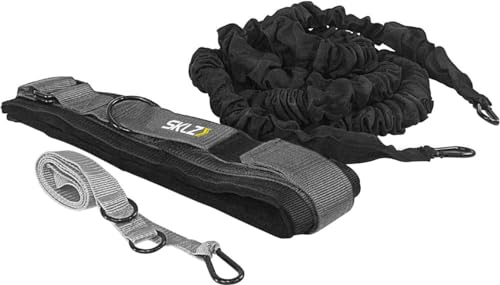
- 15–50 lb dynamic resistance
- Free-motion ring supports every direction
- Lightweight for partner or solo drills
Best For: Runners training acceleration and agility
Best Premium Home-Gym Trainer
REP Fitness Arcadia Functional Trainer
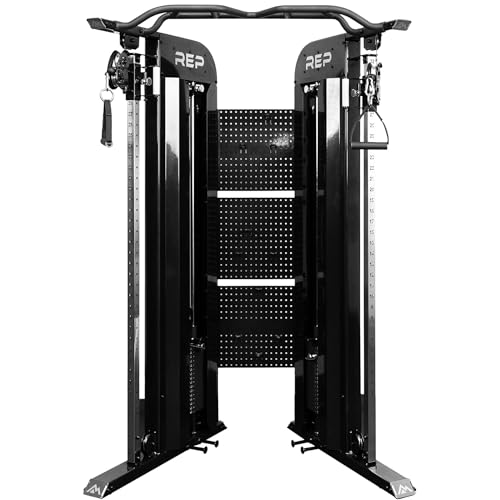
- 32 cable positions for customized movement
- Dual 170-lb stacks with upgrade options
- Band pegs and built-in accessory storage
Best For: Experienced runners with a dedicated home or garage gym
Best Portable Sprint Tool
Pseudois Resistance Bungee Band

- Cord stretches from 8 to 20 feet
- 360-degree belt supports multi-plane drills
- Includes door anchor for solo sessions
Best For: Runners training speed and agility anywhere
Speed-Release Resistance

- Dynamic load-and-release resistance
- Quick-release handle helps limit over-pulling
- Lightweight belt for multidirectional speed drills
Best For: Acceleration and power-focused speed training
Adjustable Bungee Drills
Speed and Agility Training Set

- Two elastic cords with adjustable resistance
- Includes belt, handles, and connection straps
- Supports solo and partner speed drills
Best For: Versatile acceleration and agility sessions
Coach-Controlled Sprint Resistance
THEFITGUY Coach Resistance Belt

- Non-elastic, zero-recoil resistance
- Coach or partner adjusts resistance in real time
- Padded belt for sprint and agility drills
Best For: Partner-led sprint mechanics and acceleration training
Adjustable Hydraulic Pick

- 19 resistance levels from 22 to 440 pounds
- Steady hydraulic resistance with protective housing
- Foldable design with ergonomic nonslip handles
Best For: Compact upper-body and forearm strengthening at home
Explosive Speed Pick
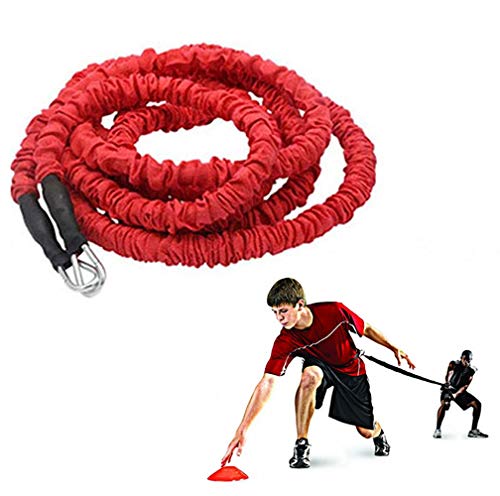
- Designed for resisted speed and explosive-force drills
- Available in three lengths up to 16.6 feet
- Supports running, agility, stamina, and strength work
Best For: Acceleration and power training with a partner or anchor
Running Form Pick
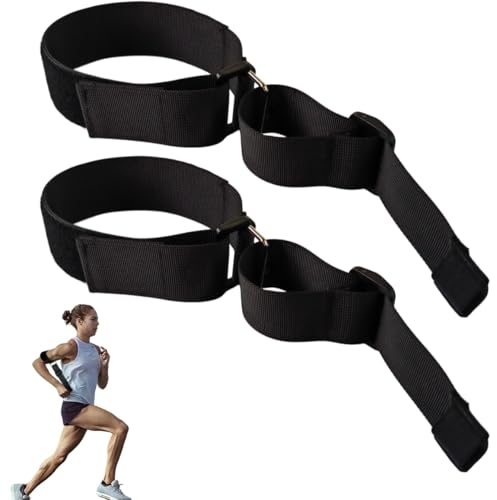
- Guides a 90-degree forward-and-back arm swing
- Designed to reduce arm crossing and wasted motion
- Adjustable straps and finger loops for fit
Best For: Running-form drills and arm-position practice
Best Compact Cable Option – FTX Functional Trainer
If you want a functional trainer for runners that also supports broader strength work, the FTX packs dual 165-pound weight stacks, sliding pulleys, a pull-up bar, and multiple accessories into a relatively compact 54-by-40-inch footprint. Its smooth pulley movement can suit controlled strength sessions at home.
Best For: Runners building a versatile home gym around cable-based strength training.
Pros:
- Compact footprint for a full functional trainer.
- Dual 165-pound weight stacks and smooth-gliding pulleys.
- Includes handles, curl bar, triceps rope, and chin/dip belt.
- Built-in accessory storage and a phone or tablet holder.
Cons:
- At 544 pounds, it is a substantial, largely stationary machine.
- The listed maximum weight recommendation is 165 pounds.
- The Centr subscription is included for only three months.
The FTX is a strong choice when running support is only one part of your routine. It offers the cable versatility needed for full-body training, but its size and weight make it better suited to a dedicated home-gym space than a portable setup.
Best for Multi-Directional Resistance – SKLZ Recoil 360
The SKLZ Recoil 360 is a portable resistance option for runners who want to add acceleration, power, and change-of-direction work. Its free-motion ring supports resistance at nearly any angle, while the cord stretches from 8 to 22 feet and provides 15 to 50 pounds of resistance.
Best For: Runners practicing resisted sprints, lateral drills, and explosive movement with a partner.
Pros:
- Supports training in multiple directions.
- Adjustable belt includes a free-motion ring.
- Lightweight at approximately 0.28 kilograms.
- Suitable for solo or partner drills.
Cons:
- Offers one listed resistance level rather than multiple settings.
- Provides less exercise variety than a cable functional trainer.
- No warranty is listed.
For runners focused on athletic movement rather than conventional gym lifting, the Recoil 360 is easier to transport and deploy than a full machine. It is best viewed as a dynamic drill tool, not a replacement for comprehensive resistance equipment.
Best Premium Home-Gym Trainer – REP Fitness Arcadia Functional Trainer
The REP Fitness Arcadia is a substantial functional trainer for runners who want a complete cable station for strength and accessory work. With 32 cable positions, dual stacks rated to 170 pounds each, and optional upgrades to 220 pounds, it offers extensive setup flexibility for a home or garage gym.
Best For: Experienced runners who want a configurable, permanent cable machine for full-body training.
Pros:
- Provides 32 cable positions for varied movement angles.
- Dual stacks support up to 170 pounds each, with upgrade options.
- Includes micro-adjustment add-on weights and built-in storage.
- Integrated band pegs add another resistance option.
Cons:
- Its 55.3-inch width and 80.8-inch height require dedicated space.
- Attachment packages beyond the included D-handles are optional.
- It is a heavy, fixed home-gym machine rather than a portable trainer.
The Arcadia makes sense when running-specific strength work is part of a larger training system. Its many cable positions and attachment compatibility offer room to progress, though the machine’s footprint and optional accessories increase the commitment.
Best Portable Sprint Tool – Pseudois Resistance Bungee Band
The Pseudois Resistance Bungee Band is a portable choice for runners seeking dynamic resistance during sprints, shuffles, and jumps. Its 8-foot cord stretches to 20 feet, and the rotating waist-belt ring allows movement forward, laterally, backward, and vertically.
Best For: Runners doing field-based speed and agility drills with a partner or door anchor.
Pros:
- Lightweight, travel-friendly setup for track, field, or home use.
- 360-degree rotation supports movement in multiple planes.
- Includes a door anchor for solo resistance training.
- Reinforced webbing, double stitching, and heavy-duty snap clips.
Cons:
- Only one medium resistance level is listed.
- It is designed for dynamic drills, not broad cable-machine exercise selection.
- The manufacturer advises inspecting the cord and clips before use.
This bungee band is a practical match for runners who prioritize speed and agility sessions over stationary lifting. It takes little setup and travels easily, but its single resistance level limits progression compared with a full functional trainer.
Speed-Release Resistance – SKLZ Acceleration Trainer
The SKLZ Acceleration Trainer is a compact option for runners seeking a functional trainer for runners that emphasizes resisted starts and multidirectional speed work. Its dynamic load-and-release design is intended to add resistance during acceleration while the quick-release handle helps limit over-pulling and erratic movement.
Best For: Runners and athletes focusing on acceleration, power development, and directional speed drills.
Pros:
- Supports resisted speed and power training from the start.
- Dynamic load-and-release method is designed for speed work.
- Force-absorbing quick-release handle helps reduce over-pulling.
- Lightweight 0.64 kg design with an adjustable buckle closure.
Cons:
- Listed as one size with a 33-inch waist size.
- Material is listed as plastic, which may feel less substantial than heavier training equipment.
This is a focused acceleration tool rather than a general-purpose cable machine. It makes the most sense for runners who want portable resistance drills and a simple release mechanism for controlled speed practice.
Adjustable Bungee Drills – Speed and Agility Training Set
This bungee set gives runners a flexible functional trainer for runners setup for resisted acceleration and agility practice. It includes two elastic cords, an adjustable belt, handles, and connection straps, allowing solo belt work or partner-controlled drills with up to 80 pounds of supported tension.
Best For: Runners, teams, and coaches who want adjustable resistance for acceleration and change-of-direction practice.
Pros:
- Includes two 8-foot cords that extend from 8 to 22 feet.
- Adjustable belt supports movement-based resistance drills.
- Handles allow a coach or teammate to provide resistance.
- Comes with padded and auxiliary connection straps.
Cons:
- Elastic cords can require more setup space as they extend.
- Partner training may be needed for handle-based drills.
- The listed 3-pound weight is less portable than an ultra-light belt-only trainer.
With two cords and several attachment components, this set offers more configuration options than a basic resistance belt. It is a practical pick when your running workouts include partner drills, acceleration work, and agility movements.
Coach-Controlled Sprint Resistance – THEFITGUY Coach Resistance Belt
THEFITGUY Coach Resistance Belt is a functional trainer for runners built around real-time, partner-controlled resistance. Its non-elastic design provides consistent resistance without bungee recoil, while the padded neoprene belt and built-in handles support coach-led sprint, acceleration, and agility drills.
Best For: Youth athletes, runners, and teams training with a coach, parent, or teammate.
Pros:
- Non-elastic design avoids snap-back and bounce.
- Partner can adjust resistance during a sprint.
- Supports acceleration, first-step quickness, and change-of-direction drills.
- Padded neoprene belt and buckle strap are designed for secure wear.
Cons:
- Its real-time resistance system requires a partner.
- It may be less suitable for solo running workouts.
- Designed around resisted drills rather than general strength training.
This belt stands out for runners who value controlled, coach-led feedback over elastic recoil. Its portable design suits practices and one-on-one sessions, provided another person is available to apply the resistance.
Adjustable Hydraulic Pick – Merach Twister Arm Trainer
The Merach Twister Arm Trainer is a compact option for runners who want supplemental upper-body work alongside a functional trainer for runners. Its hydraulic resistance adjusts from 22 to 440 pounds across 19 levels, making it suitable for controlled chest, shoulder, and forearm strengthening at home.
Best For: Runners seeking adjustable upper-body and forearm strengthening in a compact home device.
Pros:
- Offers 19 manually adjustable resistance levels from 22 to 440 pounds.
- Fully sealed hydraulic cylinder provides steady resistance through the workout.
- Triangular construction, reinforced rivets, and a micro-rebound design support stability.
- Folds for storage and includes ergonomic, nonslip PU handles.
Cons:
- Focuses on pressing and arm work rather than running-specific drills.
- Requires a nonstandard battery for the strength gauge.
This is a practical add-on for runners building arm, shoulder, and chest strength, but it is not a full-body cable or functional training station. The broad resistance range makes it adaptable as strength levels change.
Explosive Speed Pick – Resistance Training Rope
For runners comparing a functional trainer for runners, this resistance rope provides a more direct way to practice resisted movement. It is designed to develop speed, stamina, strength, agility, flexibility, balance, and explosive force through partner-assisted drills or attachment to a stable grounded object.
Best For: Runners and athletes training acceleration, resisted running, leg drive, and explosive power.
Pros:
- Built for speed, strength, agility, and explosive-force training.
- Suitable for runners and multiple sports, including basketball and football.
- Available in 6.6-, 9.8-, and 16.6-foot lengths.
- Stretch band can extend up to three times its original length.
Cons:
- Recommended use generally involves a partner or a securely grounded anchor.
- The listed configuration provides one resistance level and 50 pounds of supported tension.
This rope is a strong choice when the priority is resisted running and explosive movement rather than isolated strength work. Secure anchoring and suitable training space are important for using it safely and effectively.
Running Form Pick – Arm Swing Trainer
The Arm Swing Trainer complements a functional trainer for runners by targeting running mechanics rather than general resistance. Its 90-degree design encourages a forward-and-back arm swing, while adjustable straps and finger loops help athletes practice consistent form during drills.
Best For: Runners and team-sport athletes working on arm position, running efficiency, and movement consistency.
Pros:
- Guides athletes toward a 90-degree arm position during running drills.
- Helps discourage arm crossing across the body’s mid-line.
- Adjustable hook-and-loop straps and finger-loop length accommodate different users.
- Includes a pair made from webbing and soft elastic material.
Cons:
- It is a form-training aid, not a general strength-training machine.
- Listed size is Large, which may not suit every user without adjustment.
- Manufacturer warranty is limited to 180 days from purchase.
This is best viewed as a technique tool for reinforcing efficient arm mechanics and reducing unwanted crossing. It pairs well with strength or speed equipment when running form is the main limitation.
How We Picked the Best Functional Trainer for Runners
We evaluated these products by considering how directly they support running-related strength and conditioning. Our criteria included resistance adjustability, movement freedom, portability, setup requirements, durability, storage needs, and suitability for home or outdoor use.
We also looked for equipment that can support useful runner-focused movements, such as resisted sprints, lateral drills, hip and leg strengthening, rotational work, upper-body coordination, and core stability. A full cable machine offers the broadest exercise selection, while belts, bands, and ropes are often easier to use for dynamic drills.
Quick Comparison
| Equipment type | Best for | Main advantage |
|---|---|---|
| Functional trainer | Complete home strength programs | Adjustable resistance and exercise variety |
| Resistance belt or bungee | Sprints and acceleration drills | Portable dynamic resistance |
| Training rope | Power and conditioning | Explosive, full-body effort |
| Arm swing trainer | Running-form practice | Targets arm mechanics and coordination |
| Forearm or upper-body device | Supplemental strength work | Compact accessory training |
Key Buying Factors for a Functional Trainer for Runners
Resistance and Adjustability
Choose resistance that matches your current strength while leaving room to progress. Cable machines with weight stacks provide precise loading for strength exercises. Elastic systems are better suited to acceleration and movement drills, but their resistance can vary through the range of motion.
Training Purpose
For a broad strength plan, prioritize a functional trainer that supports rows, presses, split squats, cable pulls, rotations, and hip-focused exercises. If your priority is speed development, select a belt or bungee designed for resisted running and acceleration.
Space and Portability
Measure ceiling height, floor area, and clearance around the equipment before buying a home cable machine. Portable belts, ropes, and bands are more practical for parks, tracks, travel, or small apartments.
Safety and Setup
Inspect attachment points, straps, handles, and carabiners regularly. Use resistance equipment in a clear area, follow the manufacturer’s anchoring instructions, and avoid excessive resistance that changes your running mechanics or increases joint stress.
Who Should Buy Which Functional Trainer for Runners?
Choose a full functional trainer if you want one station for progressive strength training, mobility-supporting exercises, and general home-gym workouts. These machines are the most versatile but require more space and a larger investment.
Choose a resistance belt or bungee system if you primarily train acceleration, sprint mechanics, or resisted running. They are easier to transport and can complement, rather than replace, a complete strength program.
Choose a rope or compact upper-body tool if you need short conditioning sessions or supplemental power work. These options are useful for runners who already have access to weights and want targeted exercises.
Choose an arm swing trainer if your main goal is improving arm coordination and reducing inefficient crossover during running. Treat it as a form-training accessory, not a substitute for lower-body strength and aerobic training.