Starting seeds indoors gives gardeners more control over timing, moisture, temperature, and early plant growth. The right tray can also make transplanting easier while reducing wasted seed-starting mix and space.
These 10 seed starting trays cover a range of needs, from compact reusable cell trays to larger kits with humidity domes, grow lights, heat mats, and self-watering features. Use the guide below to narrow the choices by crop type, growing setup, and budget.
Best 10 Seed Starting Trays Picks for 2026
High-Capacity Pick
Gardzen 40-Cell Seed Starting Trays

- Five kits with 200 total cells
- Adjustable vents and clear humidity domes
- Drainage holes support easier watering
Best For: Large indoor or greenhouse seed-starting projects
Lighted Indoor Kit
Bonviee Seed Starting Trays with LEDs

- Five trays with 60 total cells
- 12-LED grow light on each tray
- USB cable included; adapter and timer excluded
Best For: Indoor seedlings needing supplemental light
Reusable Upgrade

- 36 flexible silicone cells
- Designed for gentler transplanting
- Reusable and top-shelf dishwasher safe
Best For: Repeat seed starters prioritizing easy transplanting
Stackable Propagator
MIXC 40-Cell Seed Starter Trays
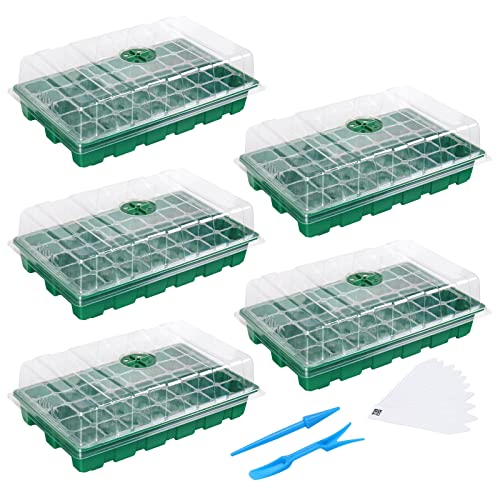
- Five 40-cell kits with 200 spaces
- Adjustable humidity-dome vents
- Bottom trays stack before germination
Best For: Space-conscious starts using small seeds
Bulk Tray Value
Reusable No-Drain Seed Starting Trays

- 10 reusable plastic trays
- No-drain design for drip trays and hydroponics
- Fits 20-by-10-inch grow pads
Best For: Bulk indoor growing, microgreens, and hydroponic setups
Complete Starter Kit

- 10 trays with 400 total cells
- Includes bases, vented domes, and tools
- Designed for indoor seedling propagation
Best For: High-volume home, classroom, and greenhouse seed starting
High-Capacity Grow System
Self-Watering Trays with LED Grow Light

- 120 cells across two trays
- Self-watering system with capillary mats
- Adjustable LED lighting and humidity vents
Best For: Indoor growers starting larger batches with integrated light and watering
Durable Root-Friendly Pick
Epic Gardening 6-Cell Seed Starter Trays

- UV-resistant recycled plastic is designed for repeated use
- Air-pruning slots encourage healthy root growth
- Finger holes simplify seedling removal
Best For: Small-batch growers seeking durable, reusable trays
Complete Indoor Growing System
36-Cell Seed Starting Tray Kit
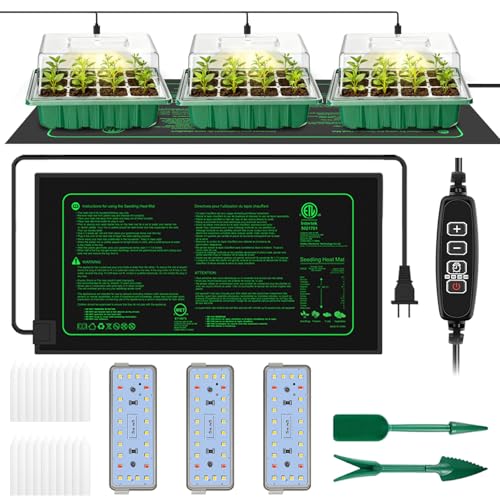
- Includes heat mat, grow lights, domes, and controller
- Provides approximately 70°F–85°F warming
- Three trays offer 36 cells for indoor propagation
Best For: Indoor growers wanting an all-in-one germination setup
Ventilated Large-Seed Choice
Bonviee 12-Cell Seed Starter Trays
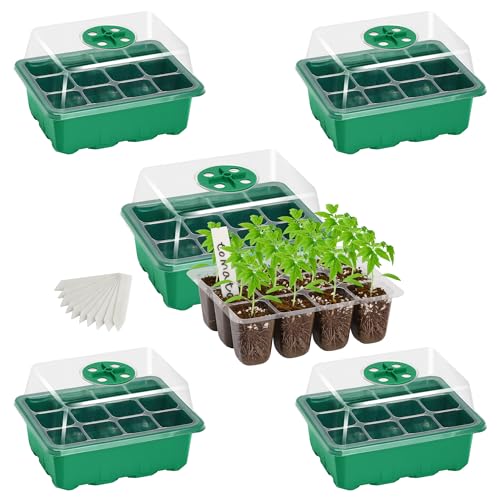
- Five trays include bases, domes, vents, and labels
- Adjustable vents help manage humidity and temperature
- 1.5-inch cells suit larger seeds
Best For: Indoor growers raising larger seeds with humidity control
High-Capacity Pick – Gardzen 40-Cell Seed Starting Trays
For gardeners starting many plants at once, the Gardzen seed starting trays provide five 40-cell kits with clear humidity domes, bases, and adjustable ventilation. Drainage holes and transparent covers make routine watering and growth checks easier.
Best For: Indoor gardeners and greenhouse growers who need 200 total cells for seeds or cuttings.
Pros:
- Five trays provide 200 planting cells.
- Adjustable vents help manage humidity and airflow.
- Clear domes, drainage holes, and included bases support straightforward seed care.
- Suitable for starting seeds, propagating cuttings, and nurturing young plants.
Cons:
- The relatively large cell count may be more than needed for small planting projects.
- Plastic trays require careful handling despite their durable construction.
This is a practical bulk option when capacity matters most. The ventilation controls and clear domes add useful control for managing seedlings through germination and early growth.
Lighted Indoor Kit – Bonviee Seed Starting Trays with LEDs
The Bonviee seed starting trays combine five 12-cell inserts with built-in 12-LED grow lights, making them a convenient choice for indoor seedlings. Clear domes, drainage holes, and transparent inserts help you monitor moisture and early root development.
Best For: Indoor gardeners who want supplemental light integrated into compact seed-starting trays.
Pros:
- Each tray includes a full-spectrum 12-LED light.
- Five trays provide 60 planting spaces.
- Vented domes allow humidity and airflow adjustments.
- USB-powered setup includes a 1-to-5 cable and plant labels.
Cons:
- A power adapter is not included.
- No built-in timer is provided.
- The 12-cell format offers less capacity per tray than larger-cell kits.
This kit is especially useful when seedlings need supplemental indoor lighting without adding separate lights over every tray. Plan to supply a compatible 5V/2A power adapter and manage the lighting schedule yourself.
Reusable Upgrade – Burpee SuperSeed 36-Cell Tray
For gardeners who prefer a reusable alternative, the Burpee SuperSeed seed starting tray uses 36 flexible silicone cells designed to pop seedlings out with less root disturbance. Its drainage channels, side handles, and labeled rows also make watering and organization more manageable.
Best For: Gardeners who start seedlings regularly and want easier transplanting and cleanup.
Pros:
- Flexible food-grade silicone cells help seedlings release for transplanting.
- Molded drainage and watering channels help manage excess water.
- Alphanumeric rows and a Plant-o-Gram support seed identification.
- Top-shelf dishwasher safe and designed for reuse.
Cons:
- It is a single tray rather than a multi-pack.
- A separate light, seed-starting mix, and other growing supplies are needed.
This tray stands out for long-term use and transplant convenience rather than maximum capacity. Its flexible cells and contained watering design make it a strong fit for gardeners who want to reuse the same tray season after season.
Stackable Propagator – MIXC 40-Cell Seed Starter Trays
The MIXC seed starting trays offer five 40-cell mini propagators with transparent trays, bottom trays, and adjustable humidity domes. Stackable bottom trays help save space before germination, while included tools and labels make the kit convenient for small-seed projects.
Best For: Indoor or outdoor growers who want a space-conscious five-pack for small seeds.
Pros:
- Five 40-cell kits provide 200 total planting spaces.
- Adjustable dome vents help regulate humidity and temperature.
- Transparent plastic allows plants to be observed without removing the cover.
- Includes two garden tools and 10 plant labels.
Cons:
- The 1.5-by-1.5-by-2-inch cells are intended for small seeds.
- The kit does not include integrated grow lights.
- Stacking is described for bottom trays before seeds germinate, not as a growing arrangement.
This is a useful value-oriented choice for organizing many small seedlings in limited space. Its adjustable vents and clear construction provide basic propagation control, while the compact cells keep the kit suited to early-stage growth.
Bulk Tray Value – Reusable No-Drain Seed Starting Trays
For gardeners who need several seed starting trays, this 10-pack offers reusable plastic trays with a generous 20-by-10-inch bottom footprint. Because they have no drain holes, they can function as drip trays or support hydroponic growing, microgreens, and wheatgrass projects.
Best For: Indoor gardeners, greenhouse setups, microgreens, hydroponic growing, and anyone needing multiple low-cost trays.
Pros:
- Includes 10 reusable plastic trays.
- No-drain design works well as a drip tray or for hydroponic applications.
- Accommodates 20-by-10-inch growing pads and mats.
- Suitable for seedlings, wheatgrass, and microgreens.
Cons:
- No drainage holes, so watering requires extra care when used with soil.
- Does not include cells, humidity domes, lighting, or planting tools.
This is a practical bulk option when you already have a preferred propagation method or need simple trays for bottom watering and contained growing. Choose a different style if you want an all-in-one germination kit with drainage and humidity control.
Complete Starter Kit – 400-Cell Seed Starting Trays
This 10-pack of seed starting trays provides 400 cells along with matching bases, clear vented humidity domes, and basic planting tools. It is a convenient choice for starting many seedlings while monitoring warmth, moisture, and early growth indoors.
Best For: Home gardens, classrooms, greenhouse projects, and growers who want a complete multi-tray propagation setup.
Pros:
- Includes 10 40-cell trays for a total of 400 cells.
- Matching bases and transparent humidity domes support contained propagation.
- Vented domes make it easier to monitor seedlings and manage humidity.
- Includes a dibber and widger for sowing and transplanting.
Cons:
- Offers 40 smaller cells per tray rather than larger individual growing spaces.
- No grow light or self-watering system is included.
With its large cell count and included accessories, this kit is well suited to organized, high-volume seed starting. You will still need to manage lighting and watering separately, particularly for indoor seedlings.
High-Capacity Grow System – Self-Watering Trays with LED Grow Light
These seed starting trays combine 120 cells with self-watering components, adjustable humidity vents, and an LED grow-light system. The two-tray kit is designed for indoor germination and gives seedlings consistent moisture and supplemental light from sprouting through transplanting.
Best For: Indoor growers starting herbs, flowers, and larger batches of seedlings who want integrated watering and lighting.
Pros:
- Provides 120 cells across two 60-cell trays.
- Self-watering system with capillary mats helps maintain consistent moisture.
- Includes four LED strips with adjustable brightness and timer functions.
- Features adjustable vents, drainage holes, humidity domes, labels, stands, and tools.
Cons:
- More complex and space-demanding than basic trays.
- Designed for indoor use and requires setup of the included lighting system.
This is the most feature-rich option of the three for indoor propagation, especially where natural light is limited. Its self-watering design and adjustable lighting reduce routine work, while the 120-cell capacity supports larger planting projects.
Durable Root-Friendly Pick – Epic Gardening 6-Cell Seed Starter Trays
For gardeners who want reusable seed starting trays instead of flimsy single-season plastic, this six-pack emphasizes durability and easy transplanting. The compact cells include air-pruning slots, an open base, and finger holes to help seedlings come out with less disturbance.
Best For: Gardeners starting a smaller number of seedlings who prioritize reusable trays and straightforward transplanting.
Pros:
- Made from recycled, UV-resistant plastic for strong, reusable performance.
- Air-pruning slots and an open base support healthier root development.
- Individual six-cell trays fit standard nursery trays and can be removed as seedlings mature.
- Large finger holes make it easier to push seedlings out without digging.
Cons:
- Each tray has only six cells, so it is less suited to large batches of seedlings.
- The cells are relatively compact, measuring about 1 9/16 inches square and 2 1/4 inches high.
This is a focused, long-use option for gardeners who want stronger construction and cleaner transplanting rather than an all-in-one propagation setup.
Complete Indoor Growing System – 36-Cell Seed Starting Tray Kit
This three-pack is built for indoor seed starting trays setups that need more than containers alone. It combines 36-cell trays with grow lights, a heat mat, an intelligent controller, and heightened humidity domes for maintaining warm, well-lit germination conditions.
Best For: Indoor gardeners starting flowers, vegetables, fruits, succulents, or cuttings during cooler conditions.
Pros:
- Includes three trays, three grow lights, a heat mat, controller, labels, and tools.
- Heat mat provides a stated temperature range of approximately 70°F to 85°F.
- Heightened humidity domes pair with the heat mat to create a warm, humid environment.
- Reusable plastic trays have drainage holes and bottom trays designed to retain overflow water.
Cons:
- The setup is intended for indoor use only.
- Its multiple components require more setup and space than basic trays.
- The 1.96-inch square cells may not suit every plant or later-stage seedling.
Choose this kit when consistent warmth and supplemental lighting are central to your propagation plan. It offers broad functionality, but basic seed starters may prefer a simpler tray-only design.
Ventilated Large-Seed Choice – Bonviee 12-Cell Seed Starter Trays
These Bonviee seed starting trays are designed for gardeners who want visibility and humidity control in a compact tabletop setup. Each of the five trays includes a 12-cell insert, watertight base, clear dome, adjustable vent, and plant labels.
Best For: Starting larger seeds such as tomatoes, peppers, eggplants, and potatoes while monitoring moisture and humidity.
Pros:
- Clear trays and lids let you observe seedlings without opening the setup.
- Adjustable vents help regulate humidity and temperature.
- 1.5-inch square cells are sized for larger seeds.
- Heat-resistant construction is designed for use on a heat mat.
Cons:
- The 12-cell format provides less capacity per tray than smaller-cell designs.
- The kit is intended for indoor use.
- Its included domes and bases create more parts to clean and store.
For gardeners raising larger seedlings, the combination of spacious cells, adjustable vents, and clear domes offers useful control. It is a practical choice when visibility and humidity management matter more than maximum cell count.
How We Picked These Seed Starting Trays
We focused on practical features that affect germination and daily care: cell size, drainage, humidity control, durability, watering design, included accessories, and overall capacity. The selection includes compact options for herbs and flowers, larger multi-cell kits for vegetable starts, and upgraded systems with grow lights or heat mats for gardeners without a bright, warm windowsill.
We also considered whether each tray is reusable, how easily seedlings can be removed, and whether the design suits beginners or more experienced indoor growers. Because seed-starting needs vary, no single tray is ideal for every crop or growing space.
Quick Comparison
| Best For | Look For |
|---|---|
| Small batches | Six- to 36-cell trays with sturdy cells and clear domes |
| Many seedlings | High-capacity multi-packs with compact cells |
| Low-light rooms | Integrated grow lights or a compatible light setup |
| Infrequent watering | Self-watering reservoirs or bottom-watering bases |
| Repeated use | Thick, washable plastic and cells that resist cracking |
Key Buying Factors for Seed Starting Trays
Cell Size and Capacity
Smaller cells save space and work well for lettuce, herbs, flowers, and seedlings that will be transplanted quickly. Larger cells hold more mix and support crops that need extra root room, including tomatoes, peppers, and cucumbers. High-capacity trays are useful when starting many plants, but crowded seedlings may need earlier thinning or potting up.
Drainage and Watering
Drainage holes help prevent waterlogged roots, while solid bases can catch runoff or support bottom watering. Check that the tray, insert, and base fit together securely. Self-watering designs reduce daily attention, but they still require monitoring so the growing medium stays moist rather than saturated.
Domes, Lights, and Heat
Clear humidity domes help maintain moisture during germination and are especially useful for small seeds. Remove or vent the dome as seedlings emerge to reduce condensation and fungal problems. Grow lights help compensate for weak window light, while heat mats can improve germination for warm-season crops. These accessories add convenience but may increase energy use and setup space.
Durability and Storage
If you plan to reuse a tray, prioritize thicker plastic, rigid bases, and cells that release seedlings without bending excessively. Flexible inserts can be convenient, but very thin material may crack during cleaning or transplanting. Stackable components are easier to store between growing seasons.
Who Should Buy Which Seed Starting Trays?
Beginners: Choose a complete kit with a base, humidity dome, and clearly separated cells. It offers a simpler starting point and makes moisture management easier.
Apartment and windowsill gardeners: Look for compact trays with modest cell counts, or choose a model with built-in grow lights if natural light is limited.
Vegetable gardeners: Larger cells, sturdy construction, and optional heat support are valuable for tomatoes, peppers, and other seedlings that remain indoors longer.
High-volume growers: Multi-packs and high-cell-count trays provide better value when starting dozens or hundreds of plants, provided you have adequate light and space.
Reusable, low-waste gardeners: Invest in durable trays that can be washed and stored after transplanting. Whichever model you choose, clean it between uses and match the cell size to the crop for the best results.