If you want dependable emergency power, the right battery matters just as much as the inverter or charger. For many households, deep cycle batteries for home backup offer a practical way to keep essentials running when the grid goes down.
In this roundup, we focus on capacity, chemistry, cycle life, safety features, and real-world usability so you can choose a battery that fits your backup goals—not just the biggest spec sheet.
Best 10 Deep Cycle Batteries for Home Backup Picks for 2026
Maintenance-Free AGM Pick
Weize 12V 100Ah Deep Cycle Battery

- Sealed AGM, maintenance-free design
- 1-3% monthly self-discharge
- 1100A max discharge current
Best For: maintenance-free backup and off-grid use
High-Capacity Lithium Upgrade
Wattcycle 12V 314Ah Mini LiFePO4

- 4.01 kWh capacity in one battery
- Bluetooth 5.0 monitoring
- 200A BMS with low-temp cut-off
Best For: large home backup and solar storage
Trusted AGM Workhorse
Renogy 12V 100Ah Deep Cycle AGM

- Sealed AGM with stable chemistry
- Series unlimited, parallel up to 4P
- Under 3% monthly self-discharge
Best For: trusted standby power and expandable battery banks
Compact Lithium Backup Choice
DUMFUME 12V 150Ah LiFePO4 Battery

- 1920Wh capacity with 4,000+ cycles
- 41.03-pound lightweight lithium build
- IP65 waterproof with 100A BMS
Best For: compact home backup and solar storage
Safe, Low-Maintenance Backup Pick
- Sealed AGM battery with minimal maintenance
- Below 3% monthly self-discharge rate
- Works across -4 to 140°F
Best For: buyers who want a simple sealed AGM for basic home backup
High-Capacity Lithium Backup Choice

- 4000+ cycle LiFePO4 battery
- Lightweight 21 lb design
- Supports series and parallel expansion
Best For: larger home backup systems that need lithium flexibility and expansion
Budget Backup AGM Option

- Sealed AGM battery with maintenance-free design
- Retains up to 65% charge after 12 months
- Wide temperature range for backup storage
Best For: small backup setups or light home energy storage
Ultra-Compact High-Capacity Pick
Renogy 300Ah Mini LiFePO4 Battery
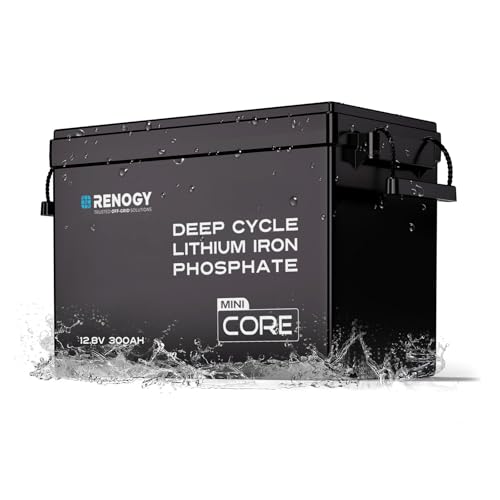
- 3840Wh real storage in a compact case
- 55.1 lb design is easier to install
- 200A BMS with low-temp cut-off protection
Best For: Home backup solar users who need big capacity in less space
Smart Monitoring Backup Choice
ECO-WORTHY 314Ah Bluetooth Battery

- Bluetooth app, LEDs, and buzzer for status checks
- 4019.2Wh capacity with 314Ah rating
- Expandable for larger backup systems
Best For: Users who want remote monitoring and easy system scaling
Compact Budget Backup Option
ABKpower 12V 20Ah LiFePO4 Battery

- Only 5 lbs and easy to place
- 6000+ cycles at 80% DOD
- Expandable up to 12.8V 80Ah
Best For: Small backup loads and portable power setups
Maintenance-Free AGM Pick – Weize 12V 100Ah Deep Cycle Battery
If you want deep cycle batteries for home backup with a straightforward, proven design, the Weize 12V 100Ah AGM battery is a practical place to start. Its sealed AGM construction helps reduce maintenance and acid-leak concerns, while the low self-discharge rate makes it a decent choice for standby use when stored properly.
Best For: Users who want a sealed, maintenance-free AGM battery for backup power, UPS-style use, solar, or off-grid setups.
Pros:
- Maintenance-free sealed AGM design helps avoid frequent upkeep
- Low self-discharge rate of 1-3% per month supports storage between uses
- Rated for 1100A max discharge current for short bursts
- Works across RV, solar, UPS, marine, and off-grid applications
Cons:
- Heavier than lithium options at 57 pounds
- Only a 1-year warranty
- AGM batteries generally offer less energy density than newer lithium models
Overall, this Weize battery fits buyers who want familiar AGM technology and simple maintenance-free operation. It is not the lightest option, but it does offer a dependable deep-cycle format for basic home backup needs.
High-Capacity Lithium Upgrade – Wattcycle 12V 314Ah Mini LiFePO4
For deep cycle batteries for home backup that prioritize capacity and monitoring, the Wattcycle 12V 314Ah LiFePO4 battery stands out. It delivers 4.01 kWh of energy in a compact package, adds Bluetooth 5.0 monitoring, and uses a 200A BMS for controlled high-output use.
Best For: Buyers who want a large lithium battery for home backup, solar storage, or heavy-demand RV power.
Pros:
- High 314Ah capacity with 4.01 kWh of energy
- Bluetooth 5.0 monitoring lets you check voltage and temperature
- Built-in 200A BMS and low-temperature cut-off add protection
- Lighter and smaller than comparable lead-acid and AGM setups
Cons:
- More expensive upfront than standard AGM batteries
- Requires lithium-compatible charging and system planning
- May be more capacity than casual backup users need
This is a strong option if you want a modern lithium battery with more usable storage and easier monitoring. Its size, weight, and long cycle-life claims make it attractive for larger backup systems where runtime matters.
Trusted AGM Workhorse – Renogy 12V 100Ah Deep Cycle AGM
The Renogy 12V 100Ah AGM battery is a solid, established choice if you want deep cycle batteries for home backup with widely used AGM chemistry. It offers sealed, stable operation, supports series and parallel expansion, and is designed to handle a range of temperatures for RVs, cabins, and backup-style power needs.
Best For: Home backup buyers who want a trusted AGM battery with predictable performance and expansion flexibility.
Pros:
- Sealed AGM design with higher chemical stability than some other chemistries
- Supports series connection with no limitation and parallel up to 4P
- Works in a wide temperature range from -4 to 140°F
- Low monthly self-discharge of under 3% helps with standby storage
Cons:
- Heavier than lithium alternatives at 63.9 pounds
- 2-year prorated warranty is modest
- AGM format usually trails lithium in energy density and cycle life
If you prefer a familiar battery type from a well-known brand, this Renogy unit is easy to justify. It makes sense for buyers who value proven AGM behavior and want the option to build a larger battery bank later.
Compact Lithium Backup Choice – DUMFUME 12V 150Ah LiFePO4 Battery
If you need deep cycle batteries for home backup with more energy in a lighter case, the DUMFUME 12V 150Ah LiFePO4 battery is worth a look. It delivers 1920Wh, uses a built-in 100A BMS, and is rated for over 4,000 cycles, making it a practical long-term storage option for emergency power and off-grid use.
Best For: Buyers who want a lightweight 12V lithium battery for home backup, solar storage, or compact installations.
Pros:
- 1920Wh capacity with over 4,000 cycles to 80% capacity
- Lightweight 41.03-pound build is easier to install than lead-acid
- 100A BMS provides overcharge, over-discharge, short-circuit, and overheating protection
- IP65 waterproof rating adds durability for varied environments
Cons:
- Not designed for engine starting
- Requires temperatures of 5°C or higher for battery performance
- Needs periodic maintenance cycles during long storage
For buyers who want a smaller lithium battery without giving up solid backup-friendly capacity, this DUMFUME model is a compelling middle ground. Its weight savings and expansion support make it especially useful where space is tight.
Safe, Low-Maintenance Backup Pick – Renogy 12V 100Ah AGM
If you’re comparing deep cycle batteries for home backup, this Renogy 12V 100Ah AGM is a practical sealed lead-acid option for basic emergency power. Its low self-discharge rate, stable chemistry, and wide temperature range make it a straightforward choice for backup use in cabins, RVs, and off-grid setups where reliability matters more than cutting-edge features.
Best For: Home backup buyers who want a maintenance-free AGM battery with strong safety and shelf-life benefits.
Pros:
- Sealed AGM design keeps maintenance simple and avoids internal troubleshooting.
- Low monthly self-discharge rate below 3% helps it hold charge in storage.
- Rated for operation from -4 to 140°F for more flexible backup placement.
- Can power common appliances like a fridge, microwave, CPAP, and laptop.
Cons:
- At 63.9 pounds, it is relatively heavy to move or mount.
- Lead-acid design is less advanced than lithium for long-term expansion.
For users who want a dependable backup battery with minimal upkeep, this Renogy AGM is easy to understand and easy to live with. It is best suited to modest home backup needs rather than a high-capacity lithium bank.
High-Capacity Lithium Backup Choice – HQST 12V 200Ah LiFePO4
For deep cycle batteries for home backup, this HQST LiFePO4 model stands out if you want more capacity, lighter weight, and easier system expansion. It is built around A-grade lithium cells, supports series and parallel connections, and includes BMS protection, making it a strong fit for larger backup setups where performance and scalability are priorities.
Best For: Home backup users building a lighter, expandable lithium battery bank with more usable power.
Pros:
- LiFePO4 chemistry is rated for 4000+ deep cycles and long service life.
- Built-in BMS helps protect against over-current, over-charge, over-discharge, and short circuits.
- At 21 lbs, it is much lighter than typical lead-acid batteries.
- Supports series and parallel wiring for building larger home backup systems.
Cons:
- Requires charging and discharging temperature protection limits below 23°F and above 140°F.
- Not suitable for golf carts.
This is the most flexible option in the group if your backup plan includes scaling into a larger battery bank. The combination of weight savings, protection features, and connection options makes it appealing for serious home backup projects.
Budget Backup AGM Option – VEVOR 12V 75Ah Deep Cycle
If you need a smaller deep cycle batteries for home backup option, this VEVOR 12V 75Ah AGM battery offers a simple sealed design with useful standby traits. It is designed for rechargeable backup use, has low self-discharge, and can handle a wide temperature range, making it suitable for homeowners who want a straightforward secondary battery for emergency readiness.
Best For: Buyers who want a smaller AGM battery for backup storage or light home energy use.
Pros:
- AGM construction is fully sealed, maintenance-free, and shock-resistant.
- Low self-discharge helps it retain up to 65% of charge after 12 months in storage.
- Works in harsh temperatures from -4°F to 140°F with automatic charging and discharging limits.
- Standard T16 terminal supports easy setup across multiple systems.
Cons:
- 75Ah capacity is smaller than the 100Ah and 200Ah options in this roundup.
- Not intended for engine starting use.
This VEVOR battery is a sensible pick when you want backup readiness without stepping up to a larger or more expensive pack. It is best viewed as a compact, no-fuss AGM solution for light-duty home storage and emergency support.
Ultra-Compact High-Capacity Pick – Renogy 300Ah Mini LiFePO4 Battery
For deep cycle batteries for home backup, this Renogy 12V 300Ah LiFePO4 model is built for people who want a large energy bank without a bulky footprint. It combines a compact case, 3840Wh of real storage, and a 200A BMS, making it a practical option for off-grid backup systems where space, weight, and cycle life all matter.
Best For: Home backup solar setups, RVs, and off-grid users who want high capacity in a smaller, lighter battery.
Pros:
- 300Ah capacity with 3840Wh real storage for extended runtime
- Compact design is 31% more space efficient than other 12V 300Ah LiFePO4 batteries
- Lightweight at 55.1 lbs, making installation easier than lead-acid options
- 200A BMS includes low-temperature cut-off and multiple protection layers
Cons:
- Low-temperature charging pauses below 32°F, so cold-weather use needs planning
- Higher-capacity battery may be more than some small backup systems need
This is a strong choice if you want a serious backup battery with a long claimed lifespan of over 5,000 cycles at 80% DOD. The compact form factor and broad certification list make it especially appealing for users trying to fit more storage into limited space.
Smart Monitoring Backup Choice – ECO-WORTHY 314Ah Bluetooth Battery
If you’re comparing deep cycle batteries for home backup, this ECO-WORTHY 12V 314Ah LiFePO4 stands out for monitoring and expansion. It pairs 4019.2Wh of energy with Bluetooth app access, SOC LEDs, and a buzzer alert system, so you can keep tabs on battery status without opening the enclosure.
Best For: Backup systems where remote monitoring, fault alerts, and large expansion potential are priorities.
Pros:
- 314Ah capacity and 4019.2Wh storage for longer backup runtime
- Bluetooth app monitoring plus SOC/status LEDs for easier tracking
- 200A BMS with high/low voltage, overload, and temperature protections
- Expandable up to 4P2S or 2P4S for larger systems
Cons:
- Low-temperature charging protection cuts off below -7°C, so cold climates need attention
- At 60.4 lbs, it is still substantial to move and install
For home backup users who want visibility into battery health, this model offers more day-to-day information than a basic lithium battery. Its larger capacity and flexible expansion make it a sensible foundation for a growing power system.
Compact Budget Backup Option – ABKpower 12V 20Ah LiFePO4 Battery
For smaller deep cycle batteries for home backup, this 12V 20Ah LiFePO4 battery is a compact storage option for light-duty needs. It offers 256Wh of energy, a 20A BMS, and a lightweight 5 lb design, which makes it easier to place in tight spaces or portable backup setups.
Best For: Small backup loads, portable power, and compact solar or UPS-style systems.
Pros:
- Very light at 5 lbs, with a compact footprint for easy installation
- 6000+ cycles at 80% DOD and up to 10 years of claimed service life
- 20A BMS with over-charge, over-discharge, short-circuit, and over-heating protection
- Can expand to 12.8V 80Ah by connecting up to 4 batteries in parallel
Cons:
- 20Ah capacity is far smaller than full-house backup batteries
- Not intended for starting batteries, golf carts, or jacks
This is a practical pick when you need lithium backup storage for modest loads rather than whole-home coverage. Its portability and long cycle rating are the main strengths, especially for users building a small solar or emergency power system.
How We Picked These Deep Cycle Batteries for Home Backup
We prioritized battery chemistry, usable capacity, cycle life, discharge performance, protection features, and maintenance demands. We also looked at whether each option is better suited to short outages, whole-home backup support, or portable emergency use. For home backup, the best choice is usually the battery that matches your inverter, charging setup, and runtime needs without overspending on capacity you will not use.
Quick Comparison
AGM batteries are the simpler, budget-friendlier choice if you want sealed, familiar lead-acid construction and do not need maximum cycle life. LiFePO4 batteries cost more upfront, but they typically deliver longer service life, deeper usable capacity, faster charging, and lighter weight. If space is tight or you expect frequent outages, lithium models are usually the stronger long-term value.
Key Buying Factors for Deep Cycle Batteries for Home Backup
Capacity and Runtime
Look at amp-hours and watt-hours, then translate that into the appliances you actually want to power. A 100Ah battery may handle lights, routers, and small electronics, while larger 200Ah to 314Ah packs are better for longer outages or heavier loads.
Battery Chemistry
AGM batteries are maintenance-free and widely compatible, but they are heavier and generally offer fewer cycles. LiFePO4 batteries provide more usable energy and much longer cycle life, making them ideal for frequent backup use and solar charging systems.
Battery Management and Protection
For lithium batteries, a strong BMS is essential. Look for low-temperature protection, overcharge and overdischarge safeguards, and appropriate continuous discharge ratings. These features help the battery perform safely in a home backup setup.
System Compatibility
Make sure the battery voltage matches your inverter and that your charger supports the chemistry you choose. If you plan to expand later, check whether the battery is suitable for series or parallel configuration.
Who Should Buy Which Deep Cycle Batteries for Home Backup?
If you want the easiest setup and lower upfront cost, choose AGM. If you want the best long-term value, lighter weight, and more usable capacity, choose LiFePO4. Smaller 20Ah to 75Ah models suit compact backup needs or portable gear, while 100Ah batteries fit basic household essentials. Larger 200Ah to 314Ah options are better for extended outages, solar integration, and higher-demand backup systems.
For most buyers comparing Deep Cycle Batteries for Home Backup, the best option is the one that balances runtime, lifespan, and compatibility with your existing power system.