Choosing the right charge controller can make or break a home backup solar setup. The best models protect your batteries, improve charging efficiency, and help your system run safely when the grid is down.
Below, we focus on practical options for different battery banks, panel sizes, and budgets so you can match the controller to your backup power needs.
Best 10 Solar Charge Controllers for Home Backup Picks for 2026
Premium MPPT for Larger Home Backup Systems
Victron SmartSolar MPPT 100V 50A

- 100V, 50A MPPT controller for 12/24V systems
- Fast tracking helps recover power in partial shade
- VictronConnect app adds monitoring and configuration
Best For: Larger home backup systems needing smart monitoring and efficient charging
Budget PWM with LCD Controls
30A Auto-Parameter PWM Controller

- Auto-adapts to 12V or 24V systems
- LCD display with load timing and manual settings
- Lead-acid only, with built-in safety protections
Best For: Simple, low-cost home backup setups with lead-acid batteries
Compact MPPT for Small Backup Arrays
Victron SmartSolar MPPT 75V 15A

- 15A MPPT controller for 12/24V systems
- Bluetooth app support with performance history
- Compact size with direct load output control
Best For: Small backup arrays where space-saving and app monitoring matter
All-Weather MPPT for Flexible Home Backup
Renogy Rover 40A MPPT Controller

- 40A MPPT controller with 98% conversion and 99% tracking
- Supports Gel, AGM, Flooded, and Lithium batteries
- Built for extreme temperatures with full protection
Best For: Flexible home backup systems that need battery compatibility and durability
Smart High-Capacity MPPT Option
ECO-WORTHY 60A MPPT with Bluetooth & WiFi

- 60A MPPT controller with up to 99.5% tracking efficiency
- Bluetooth and WiFi app monitoring with 30-day history
- Works with 12V/24V/36V/48V and lead-acid or LiFePO4 batteries
Best For: Larger backup systems needing remote monitoring and flexible battery support
High-Amp Multi-System Controller
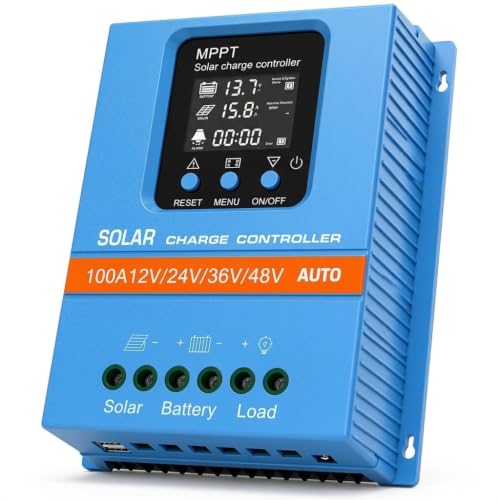
- 100A MPPT controller with 99.5%+ tracking efficiency
- Auto-detects 12V/24V/36V/48V and supports common battery types
- Large display, dual USB, and multiple safety protections
Best For: Bigger home backup and hybrid systems that need high current capacity
Compact Entry-Level PWM Pick
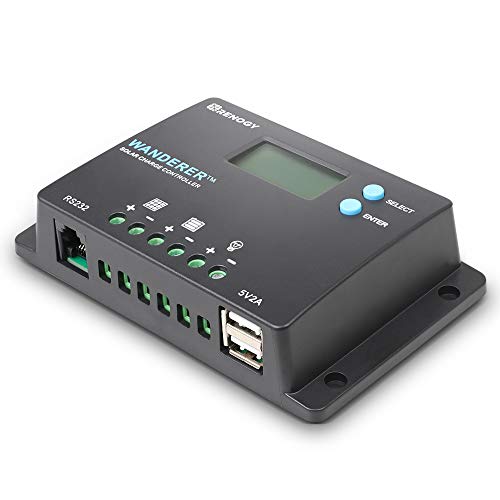
- 10A PWM controller with 4-stage charging
- Compact IP32 design for small installs
- LCD display plus load control and protection features
Best For: Smaller backup systems and budget-conscious RV-style setups
Budget PWM Regulator
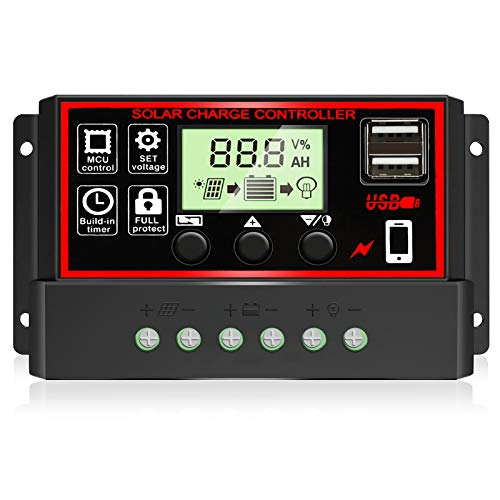
- Works with 12V and 24V systems
- Dual USB outputs for small devices
- LCD display with multiple protections
Best For: lead-acid home backup setups needing 12V/24V support
Feature-Rich MPPT Option
12V 10A MPPT Controller with USB-C

- MPPT charging for 12V systems under 200W
- LCD plus LED status monitoring
- TYPE-C and USB output ports
Best For: small 12V home backup systems with device-charging needs
Premium MPPT for Larger Home Backup Systems – Victron SmartSolar MPPT 100V 50A
If you want solar charge controllers for home backup that focus on efficiency and control, this Victron SmartSolar MPPT is built for serious systems. It uses fast MPPT tracking to squeeze more power from your panels, even when part of the array is shaded, while the app adds useful monitoring and setup options.
Best For: Home backup builds that need higher current capacity, smart monitoring, and strong charging optimization.
Pros:
- 100V, 50A MPPT design for larger 12/24V systems
- Optimizes output in partial shade with fast tracking
- VictronConnect app provides real-time data and 30-day history
- Can synchronize with other SmartSolar controllers
Cons:
- No built-in display on the unit
- More advanced than basic controllers if you only need simple charging
- May be more capacity than a small backup setup requires
For a home backup system that benefits from higher output and detailed control, this model stands out for its MPPT performance and connectivity. It is a strong fit when you want your solar charging to be efficient, monitored, and ready to support battery longevity.
Budget PWM with LCD Controls – 30A Auto-Parameter PWM Controller
This PWM option is a practical pick among solar charge controllers for home backup when you want straightforward control and an easy-to-read LCD. It automatically adapts to 12V or 24V systems, supports lead-acid battery types, and includes built-in protection features to help keep a basic backup setup operating safely.
Best For: Simple home backup systems using lead-acid batteries and a budget-friendly controller with LCD feedback.
Pros:
- Automatic 12V/24V adaptation
- LCD display shows status and data
- Supports lead-acid batteries and memorizes user parameters
- Includes overcurrent, short-circuit, low-voltage, and overcharge protection
Cons:
- Only suitable for lead-acid batteries
- Not intended for lithium or nickel-metal hydride batteries
- PWM design is less advanced than MPPT alternatives
If your backup setup is uncomplicated and centered on lead-acid storage, this controller covers the essentials without adding complexity. It is best viewed as a functional, easy-to-use choice rather than a high-end efficiency upgrade.
Compact MPPT for Small Backup Arrays – Victron SmartSolar MPPT 75V 15A
For smaller solar charge controllers for home backup, this Victron SmartSolar MPPT gives you the same style of smart charging features in a compact 15A format. It is designed to maximize available panel power, work well in partial shade, and provide app-based monitoring for people who want visibility without a large controller footprint.
Best For: Smaller home backup setups that want MPPT efficiency and Bluetooth app monitoring in a compact unit.
Pros:
- MPPT tracking helps maximize available solar output
- Bluetooth and VictronConnect app support real-time insight
- Compact size suits tighter install spaces
- Can power loads directly with configurable disconnect settings
Cons:
- 15A rating may be limiting for bigger backup arrays
- No full display, only LED or minimal display
- Smaller capacity than the 50A version
This is a solid fit when your backup system does not need large amperage but still benefits from efficient charging and app control. It keeps the package compact while still delivering the core SmartSolar features.
All-Weather MPPT for Flexible Home Backup – Renogy Rover 40A MPPT Controller
If you need solar charge controllers for home backup that can handle a wide range of battery types, this Renogy Rover 40A is a versatile MPPT choice. It supports Gel, AGM, Flooded, and Lithium batteries, includes app connectivity through Renogy’s ecosystem, and is built for harsh temperatures and full electrical protection.
Best For: Home backup systems that need broad battery compatibility, strong MPPT performance, and all-weather reliability.
Pros:
- High MPPT efficiency with 98% conversion and 99% tracking
- Supports Gel, AGM, Flooded, and Lithium batteries
- Built for extreme temperatures from -40°F to 149°F
- Includes remote temperature sensor and 3-year warranty
Cons:
- BT-2 for app connection is sold separately
- More complex than basic controllers if you only need simple charging
- Larger physical footprint than compact models
This Renogy model is a strong fit if your backup plan may evolve over time or uses different battery chemistries. It balances efficiency, durability, and monitoring support in a package aimed at off-grid-style reliability.
Smart High-Capacity MPPT Option – ECO-WORTHY 60A MPPT with Bluetooth & WiFi
If you want solar charge controllers for home backup that can handle a larger system, this ECO-WORTHY 60A MPPT model is built for high-input setups with modern monitoring. It combines MPPT tracking, automatic system-voltage detection, and app-based oversight for users who want strong charging performance and simple day-to-day checks.
Best For: Home backup systems that need 12V to 48V support, remote monitoring, and high charging capacity.
Pros:
- MPPT tracking efficiency up to 99.5% and peak conversion efficiency up to 98%.
- Bluetooth and WiFi monitoring with app access, parameter customization, and 30-day history.
- Supports 12V/24V/36V/48V systems and lead-acid or LiFePO4 batteries.
- Includes multiple protections such as reverse connection, short circuit, high temperature, and load overcurrent.
Cons:
- Bluetooth and WiFi features depend on the included module being present.
- Best suited to users who need a more advanced controller rather than a basic setup.
Overall, this is the strongest fit if you want a feature-rich controller for a larger backup power setup and prefer app-based monitoring over a simple LCD-only unit.
High-Amp Multi-System Controller – SA100A 100A Intelligent MPPT
For solar charge controllers for home backup where higher amperage matters, this 100A intelligent MPPT unit is aimed at bigger off-grid and hybrid setups. It adds automatic 12V/24V/36V/48V recognition, a large LED display, and dual USB charging, making it practical for users who want a capable controller with clear status readouts.
Best For: Larger backup power systems, hybrid setups, and users who want high current capacity with built-in display and USB charging.
Pros:
- 100A capacity with MPPT tracking efficiency of no less than 99.5%.
- Automatically recognizes 12V/24V/36V/48V systems and supports major battery types.
- Large LED/LCD-style display shows voltage, current, temperature, and error codes.
- Includes dual USB ports and multiple protection features for surges, shorts, and overheating.
Cons:
- Its size and power level may be more than needed for small home backup systems.
- The feature list is broad, so it may be overkill for simple installations.
This is a strong pick if your backup setup needs more output headroom and you want a controller that gives you both detailed system data and flexible load-control options.
Compact Entry-Level PWM Pick – Renogy Wanderer 10A 12/24V
If you are comparing solar charge controllers for home backup on a smaller scale, this Renogy Wanderer is the most straightforward option here. It uses PWM charging rather than MPPT, but still offers 4-stage charging, multiple load modes, and a compact waterproof design that works well for modest 12V or 24V systems.
Best For: Small backup or RV-style systems where compact size, simple monitoring, and battery protection matter most.
Pros:
- 4-stage charging for AGM, Gel, Flooded, and Lithium batteries.
- Manual, automatic, and timed load control modes for DC loads.
- Compact design with IP32 waterproof rating and negative-ground compatibility.
- Includes LCD status display, temperature compensation, and built-in protections.
Cons:
- 10A output is much lower than the other controllers in this roundup.
- PWM design is better suited to smaller setups than larger home backup arrays.
This controller makes the most sense if your backup needs are basic and you value proven battery care, small size, and simple installation over higher power handling.
Compact MPPT Pick – SOLPERK 10A 12V Waterproof Controller
If you’re comparing solar charge controllers for home backup, this SOLPERK MPPT model is a compact 12V option built to charge efficiently and keep a small backup setup simple. It’s aimed at users who want automatic monitoring, multiple battery compatibility, and basic status indicators in a portable package.
Best For: 12V home backup setups that need a small, efficient controller for AGM, gel, lead-acid, deep cycle, sealed, flooded, or LiFePO4 batteries.
Pros:
- MPPT charging is rated as 30% more efficient than PWM for faster battery charging.
- Works with a wide range of 12V batteries, including LiFePO4, AGM, gel, and flooded types.
- Includes LED indicators plus IP67 waterproof construction for easier monitoring and tougher use.
- SAE port makes installation and plug-and-play connection straightforward.
Cons:
- Designed only for 12V battery systems.
- No advanced display features are listed beyond indicator lights.
- 10A output may be too limited for larger backup arrays.
This is a practical pick if you want efficient MPPT charging without adding complexity to a home backup setup. Its strength is compatibility and simplicity rather than high-capacity system expansion.
Budget PWM Regulator – 30A Dual USB Solar Controller
For shoppers looking at solar charge controllers for home backup, this 30A PWM regulator focuses on broad 12V/24V compatibility and simple monitoring. It adds dual USB outputs and a configurable LCD, making it a practical choice for basic backup systems that use lead-acid batteries.
Best For: 12V or 24V home backup systems using lead-acid batteries that benefit from an LCD display and USB charging ports.
Pros:
- Supports 12V and 24V systems with automatic management.
- Dual USB output can charge phones, tablets, or other small devices.
- Includes overcurrent, short-circuit, reverse connection, low-voltage, and overcharge protection.
- LCD display allows status checks and parameter adjustments.
Cons:
- Only supports lead-acid batteries: OPEN, AGM, and GEL.
- PWM design is less advanced than MPPT options.
- Not suitable for lithium batteries.
This controller makes sense if you want a straightforward backup regulator with useful display and USB features. Its biggest limitation is battery compatibility, so it’s best matched to lead-acid-based home systems.
Feature-Rich MPPT Option – 12V 10A MPPT Controller with USB-C
If you want solar charge controllers for home backup with more modern features, this 12V MPPT unit adds clear monitoring, zero idle drain, and dual device ports. It is designed for 12V systems under 200W, making it a focused choice for smaller backup builds that still need solid protection and convenient outputs.
Best For: 12V home backup systems under 200W that need MPPT charging, device charging ports, and strong safety protection.
Pros:
- 10A MPPT charging is designed for faster and more stable battery charging on 12V systems.
- LCD screen and LED indicators show battery level, charging mode, current, and voltage.
- TYPE-C and USB output ports let you power or charge small electronics directly.
- Includes six protections, plus zero idle drain and reverse current protection.
Cons:
- Only compatible with 12V systems.
- Not suitable for solar panels above 200W.
- No polarity converter is included.
This is the most feature-packed of the three for smaller backup systems, especially if you want both charging performance and device outputs. It fits best where 12V-only compatibility is not a problem.
How We Picked the Best Solar Charge Controllers for Home Backup
For Solar Charge Controllers for Home Backup, we prioritized charging efficiency, battery compatibility, input voltage headroom, monitoring features, and build quality. We also looked for controllers that make sense for real-world backup systems, from compact battery banks to larger multi-panel setups.
Quick Comparison
MPPT controllers are the better choice for most home backup systems because they harvest more usable energy, especially when panel voltage is higher than battery voltage. PWM models can still be a smart budget option for smaller, simpler systems where panel and battery voltages are closely matched. Higher amp ratings matter if you expect to expand your array, while Bluetooth, WiFi, and LCD monitoring can make setup and troubleshooting easier.
Key Buying Factors for Solar Charge Controllers for Home Backup
Controller Type: MPPT Vs. PWM
MPPT controllers are more efficient and usually better for home backup use, particularly if you want to maximize output during cloudy conditions or from longer wire runs. PWM controllers cost less and work well for smaller systems, but they sacrifice some energy harvest.
Battery and System Voltage
Make sure the controller matches your battery bank voltage and supports your battery chemistry. Many home backup systems use 12V or 24V banks, but some larger systems may require 36V or 48V support. If you use LiFePO4, AGM, gel, or flooded batteries, confirm that the controller offers the correct charging profile.
Current and Input Headroom
Choose a controller with enough amp capacity for your solar array, plus extra margin for future expansion. Input voltage rating is equally important; a higher PV input limit gives you more flexibility with series panel wiring and helps prevent overvoltage issues.
Monitoring and Installation Ease
LCD screens, Bluetooth, or WiFi can simplify setup and give you visibility into charging performance. For home backup, that can be especially helpful when you want to verify battery state, charging status, and system health without a separate monitor.
Who Should Buy Which Solar Charge Controllers for Home Backup?
If you are building a small backup setup on a tight budget, a PWM controller may be enough. If efficiency and expandability matter more, MPPT is the safer long-term choice. Pick a lower-amp controller for compact systems, and move to a 40A, 50A, 60A, or higher model when you plan to power larger battery banks or add more panels. For users who want easier diagnostics, choose a model with app connectivity or a clear LCD interface.
In short, the best solar charge controller is the one that matches your panels, batteries, and growth plans while giving you the charging control and monitoring your home backup system needs.